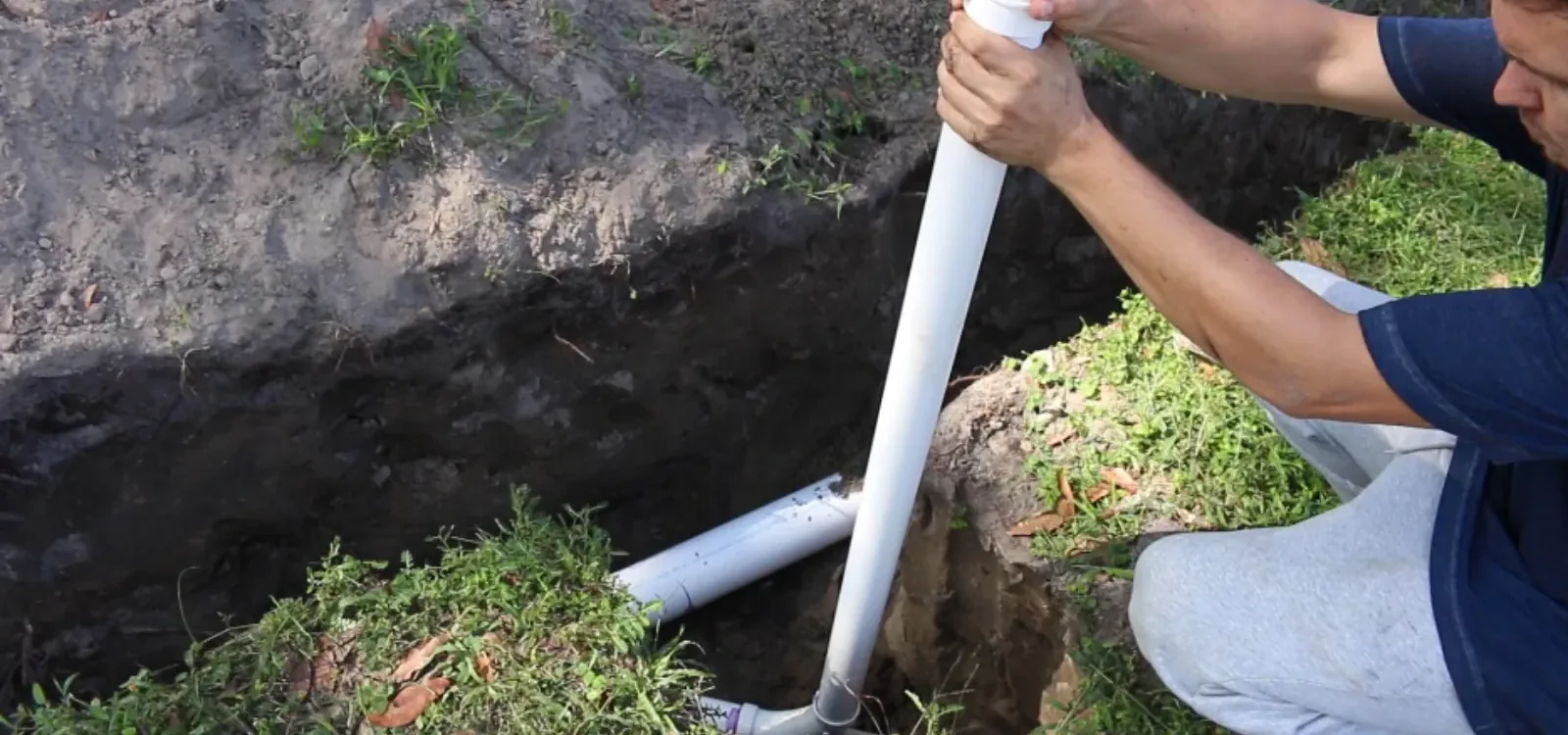
Five things that build the price of a sewer repair
Every sewer quote is a sum of a few decisions. Knowing which ones apply to your yard lets you ask better questions and spot a quote that skips something.
A single cracked joint and a full run of failed pipe are different jobs. The camera shows whether the damage is one spot or a long stretch, and that sets how much pipe, liner or trench the job needs.
A shallow line is quick to reach. A deep one needs wider trench walls, shoring and more machine time, and every foot of depth adds to all three.
Open lawn is the easy case. A driveway, a patio, a tree root ball or a finished basement slab adds demolition and restoration work that has nothing to do with the pipe itself.
Digging out and replacing pipe, lining the existing pipe, and bursting old pipe while pulling in new all carry different crew, equipment and restoration costs. The right method depends on the pipe's condition, not on preference.
Work on the building sewer needs a city inspector on site before the line is opened. That scheduling is part of the job, and it is better planned into the quote than discovered halfway through.
Most homeowner policies cover sudden accidental damage but not a pipe that failed from age, roots or settling. Ask your insurer before the work starts, since sewer line coverage is often a separate add-on. For a real number on your line, call and describe the symptoms.
Is it broken or just clogged? Signs that point to a damaged line
A clog can be cleared in one visit. A broken line keeps coming back no matter how many times it is cleared. These patterns suggest damage:
- Backups return within weeks of a cable pass. Roots or a collapsed section are catching waste faster than a cleaning can keep up.
- Several fixtures act up together, such as a basement floor drain gurgling when the washer drains. The shared main is restricted.
- A sewage smell in the yard or a patch of unusually green, soggy lawn along the line's path. Waste is escaping into the soil.
- Sinkholes or sunken strips in the ground over the pipe, where soil has washed into a break.
- Rodent or insect activity near drains, which can follow a gap in the pipe that gives them a way in.
None of these prove a break on their own. A sewer camera inspection turns the guess into a recording, and it is the step that makes any cost discussion meaningful.
Dig, line or burst: how the repair method moves the bill
| Method | Best suited to | What drives its cost |
|---|---|---|
| Open trench replacement | Collapsed, offset or badly bellied pipe | Trench length, depth, surface restoration |
| Spot repair | One short damaged section with sound pipe on both sides | Digging to reach one spot, then a short coupling or pipe run |
| Cured-in-place lining | Cracked or root-invaded pipe that still holds its shape | Pipe diameter, cleaning needed first, access points |
| Pipe bursting | Old pipe along a long straight run | Entry and exit pits, pipe size, soil conditions |
Lining and bursting avoid a long trench, which is why they appeal on a finished lawn. They do not suit a pipe that has collapsed, pulled apart or lost its slope, and a camera is what rules them in or out. Our sewer line repair work starts with that recording for exactly this reason.
The lowest-priced method on paper is the wrong choice if the pipe cannot accept it. A liner needs a pipe to line, and a bellied section holds water whether or not it is lined.
Think your sewer line is broken?
Call and describe what is backing up. A camera visit gives you a quote that matches the actual pipe.
What North Ridgeville's rules add to a sewer repair
North Ridgeville's building rules say no building sewer may be opened to connect the building drain unless a Building Division inspector is present. That means a repair cannot simply start on a convenient morning. The inspection has to be arranged, and the Building Division asks for at least 24 hours of notice, so build that wait into your plans for the dig.
The city's residential permit application has a Service Line category, and it requires a permit for alterations involving the sanitary sewer system. Permit rules vary by job, so ask the North Ridgeville Building Division at (440) 490-2081 whether your repair needs one. Any contractor working in the city must also be registered with it. Repairs must meet the Ohio Plumbing Code, built on the International Plumbing Code (IPC).
The city side of the system is a different matter. If neighbors have the same backup, the Public Utilities Division at (440) 490-2049 should hear about it, since a blocked city main is not fixed by digging up your yard. Homes in Sheffield Village and Avon follow their own local offices, so the same repair there may run through different rules.
What the camera visit tells you before any money changes hands
A camera on a flexible rod travels the line from a cleanout and records the pipe wall. The plumber reads the video with you, noting the distance to each defect. That distance is what lets a crew locate the spot above ground.
- 1Clear enough to see. Heavy buildup is cleared first, because a camera blocked by grease shows nothing.
- 2Run the full line. The camera goes from the house toward the street, noting joints, cracks, roots and low spots.
- 3Mark the defect depth and distance. This tells the plumber whether a dig is practical and how long it would be.
- 4Compare methods. The recording shows which options the pipe can accept.
- 5Quote the chosen one. The price describes a specific repair, not a range of possibilities.
How to compare two sewer repair quotes without a spreadsheet
Two quotes that differ a lot usually describe different jobs. Before deciding which costs less, check these points on each:
- Same method? One may be a dig and the other a liner. They are not comparable until the method matches.
- Same length of pipe? Ask both plumbers to name the footage from the camera recording.
- Restoration included? Lawn, concrete or basement floor repair is often a separate line or left out.
- Permit and inspection named? A quote that never mentions the city inspector is skipping a step.
- Written scope? Anything you cannot find on paper is not part of the price.
Be wary of a contractor who pushes you to decide on the spot or asks for a large payment before any work begins. Both appear on the state's list of warning signs.
Questions we hear
Not an honest one. The length, depth and method are unknown until a camera shows the pipe. A plumber can explain the factors on the call and schedule the inspection that produces a real number.
Not always. A spot repair opens only the area over the defect, and lining or bursting uses small access pits. A collapsed or misaligned pipe usually needs a trench, and the camera decides which applies.
Often not. Policies commonly cover sudden accidental damage but not age, roots or settling, and the line may need a separate endorsement. Read your policy or ask your insurer before work begins.
Your property's private line is yours to repair. The city main is not. Call the North Ridgeville Public Utilities Division at (440) 490-2049 and ask where the responsibility changes at your address.
The city requires a Building Division inspector present before a building sewer is opened to connect the building drain. It lets the city verify the connection before it is buried.
No. Lining avoids a long trench, but it needs a pipe that still holds its shape and a line that has been cleaned first. If the pipe has collapsed or lost slope, digging is the only sound repair.
It is reasonable on a large repair. Make sure each quote is built on the same camera findings and the same method, otherwise the numbers describe different jobs.