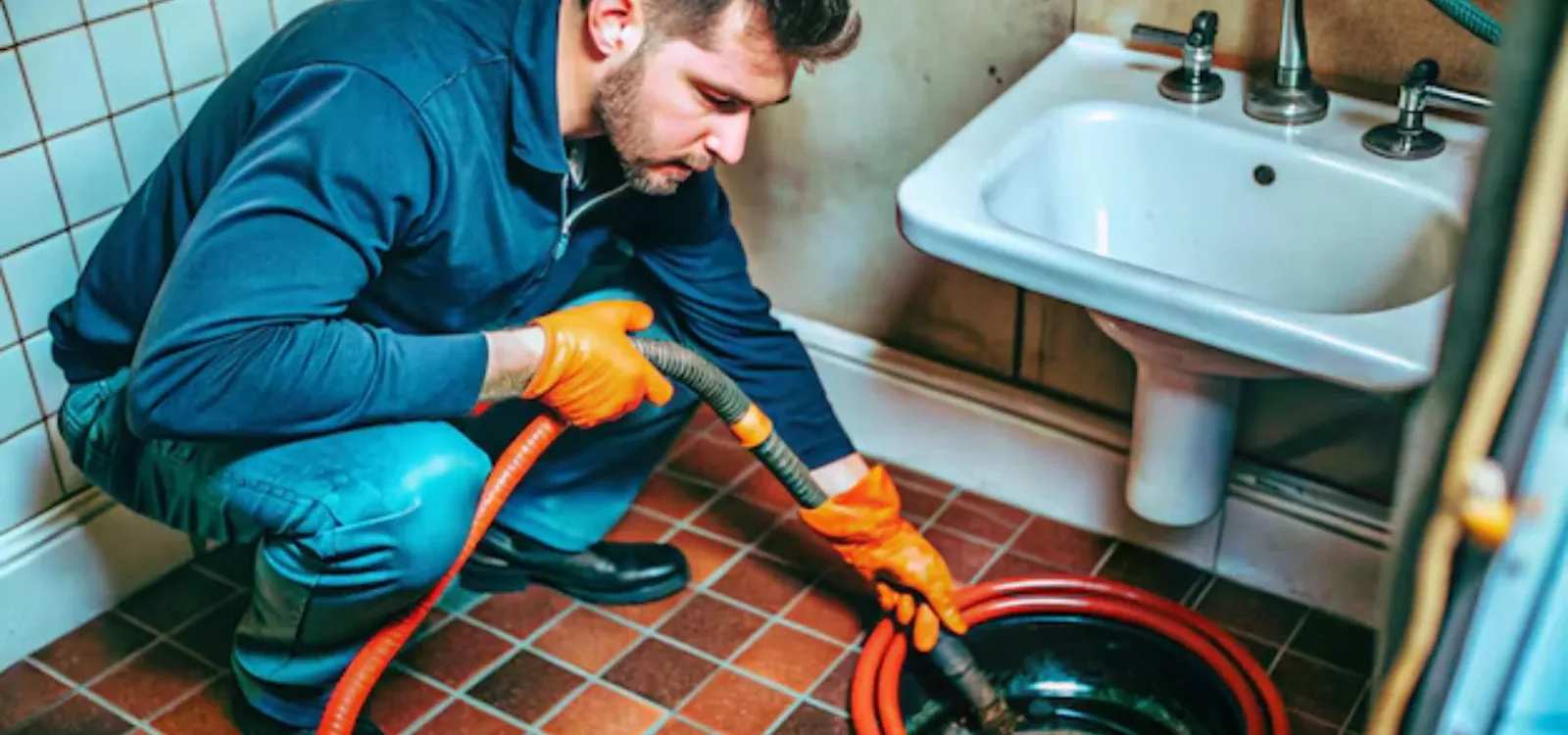
What to do while you wait for a plumber
Most clogs are not dangerous, but a backup can put dirty water on a finished floor fast. A few steps keep the mess small and make the visit shorter.
- Stop adding water: no dishwasher, laundry, showers or flushing until the line is open.
- Do not pour chemical cleaner into a stopped drain. It sits in the pipe, burns skin, and the plumber has to work around it.
- Locate the main shutoff in case a toilet or tub starts to overflow, and know which drain is backing up first.
- Note which fixtures are affected. One slow sink points to a branch clog. Several fixtures gurgling or backing up together points to the main line.
- Move rugs and boxes away from floor drains and basement bathrooms, where backups surface first.
If sewage is rising in more than one fixture and the neighbors have the same problem, tell the plumber when you call. It can mean the trouble is in the city main rather than your own pipe, which changes who fixes it.
Signs a drain is clogged and getting worse
A drain rarely fails without warning. The early signs are easy to ignore, and each one narrows down where the blockage sits.
- Water drains slowly from one sink or tub, then slower each week. A partial clog is collecting more debris.
- Gurgling after flushing or after the washer drains. Air is being pushed past a blockage in the line.
- Bad smells from a floor drain that return after you run water. Waste is sitting in a pipe that is not moving it out.
- Water backs up in a different fixture, such as the shower filling when you run the washing machine. Two fixtures share one blocked pipe.
- The same clog returns within weeks after a cable pass. Something on the pipe wall, often grease or roots, is rebuilding the blockage.
Drains in North Ridgeville homes and the city sewer behind them
North Ridgeville grew from 13,152 residents in 1970 to 35,280 in 2020, so most houses here are not old by Ohio standards, but they are not all the same age either. A 1980s home near Center Ridge Road and a newer build off Lorain Road can have different drain materials, slopes and trap arrangements, which is why a camera look beats guessing.
Household waste leaves your property through a private line and joins the city sanitary sewer. The city's Public Utilities Division bills sanitary sewer service to more than 15,000 accounts, and the main lines carry flow to the French Creek Wastewater Treatment Plant in Sheffield Village. That matters at the moment of a backup: if several neighbors report the same problem, call the Public Utilities Division at (440) 490-2049 as well, because the blockage may be in a city main.
When only your house is affected, the clog is in your own branch or building drain. Our plumber can usually tell which by the fixtures involved, and a camera confirms it. Homes in Avon and Elyria connect to different local systems, so the same symptoms can point to different next steps.
Drain stopped or backing up?
A plumber can talk you through the first steps while you wait. The line is open every hour of every day.
How a plumber finds and clears the blockage
The tool depends on what the clog is made of and how far it sits from the fixture. Using the wrong one wastes time and sometimes pushes the problem deeper.
- 1Read the symptoms. Which fixtures are slow, which gurgle, and which are fine tells the plumber whether to start at a sink trap, a branch, or the main cleanout.
- 2Open an access point. A cleanout, a removed toilet or a pulled trap gives the cable a straight path into the line.
- 3Cable the line. A hand cable breaks up soft clogs in sink and tub drains. A drum machine with a cutting head handles roots and hardened buildup in larger pipe.
- 4Run a camera when it matters. A drain camera shows a belly, a crack, a joint knocked out of line or a root mass, so the repair fits the actual damage.
- 5Flow-test the result. Water runs through every connected fixture before the plumber calls the job done.
Cabling opens a channel through a blockage. It does not scrub the pipe wall. When grease or scale keeps closing the line again, hydro jetting washes the full pipe diameter with high-pressure water and is the better tool for a repeating clog.
Cable, jetting or camera: which one fits your drain
| Situation | Best first tool | Why |
|---|---|---|
| One sink or tub drains slowly | Hand cable | Reaches the trap and branch without opening anything else |
| Kitchen line clogs every few weeks | Cable, then jetting | Cable clears the plug, jetting removes the grease coating that rebuilds it |
| Toilet and tub back up together | Drum machine at the main cleanout | A shared pipe is blocked, usually past the branch lines |
| Floor drain smells or gurgles | Camera inspection | Shows whether the line is partly crushed, rooted or just dry-trapped |
| Drain was cleared and returns within days | Camera, then repair or jetting | Repeat clogs often mean damage or heavy buildup, not a one-time blockage |
If the camera shows a broken pipe or a root mass that has grown into a joint, the lasting answer is repair rather than another cleaning. In that case see sewer line repair for the options.
Kitchen sink clogs that keep coming back
The kitchen line is the most common repeat clog we hear about. Cooking fat cools inside the pipe and coats the wall, food solids stick to it, and the opening shrinks a little more with every meal.
Hot water alone does not fix this, because the fat re-hardens a few feet further down. A cable clears the plug, and a jetting pass removes the coating. A garbage disposal sends more solids into the same line, so if the disposal itself is slow or humming, check garbage disposal repair before blaming the pipe.
Wipes labeled flushable, coffee grounds and rice cause most of the rest. Wipes do not break down in a drain the way toilet paper does, and they catch on roots and rough joints.
A drain line that leaks rather than clogs shows up as damp cabinet floors or a wet spot near the line even after the blockage is gone. That is a repair, and a camera or leak detection visit pinpoints it.
What changes the price of a drain cleaning
No honest plumber can quote a drain job without knowing where the blockage is. These are the factors that move the price, and we explain which apply before work starts.
A blockage at the trap takes minutes. One forty feet down the main line needs a larger machine and more time.
A hand cable, a drum machine, a camera and a jetter each carry a different setup. The first quote covers the tool that fits your drain, not the biggest one in the truck.
A working cleanout saves time. If a toilet has to be pulled or a trap removed to get in, that is added work.
Soft buildup clears fast. Roots, a belly or a broken joint need a camera and may need repair afterward.
Emergency visits at night or on weekends are priced differently from a planned daytime appointment, and we tell you which one applies before the plumber starts.
Most homeowner policies cover sudden accidental water damage but not wear, tree roots or the clog itself. Ask your insurer about backup coverage, which is often an optional add-on. For a real number on your drain, call the line and describe what is backing up.
Permits, licenses and hiring a drain plumber
Cleaning a drain does not usually need a permit. Replacing or altering pipe does, because North Ridgeville requires a permit for changes that involve the water supply or the sanitary sewer system. Permit rules vary, so ask the North Ridgeville Building Division at (440) 490-2081 if you are unsure.
Ohio does not require a state license for residential plumbing contractors, but the city requires contractors to register with it. Ask any plumber for proof of insurance, read the written contract, and be cautious of anyone who refuses to pull a permit when one is needed or asks for a large payment up front.
Common questions
Yes. The line is open 24/7, including nights, weekends and holidays. If a drain is backing up into the house, call right away and stop running water while you wait.
Repeat clogs usually mean the pipe wall is coated with grease or scale, or that roots or a damaged section are catching debris. A camera look tells you which one, and jetting or a repair fixes it for longer than another cable pass.
We recommend against it. The chemicals can sit in a fully stopped pipe, damage older metal fittings, and injure the plumber who has to open the line afterward.
One fixture or one branch backing up usually means your own line. Several fixtures at once, or neighbors with the same trouble, can mean the main. In that case also call the North Ridgeville Public Utilities Division at (440) 490-2049.
Yes. Floor drains, laundry standpipes and utility sinks are common backup points in northern Ohio basements. We open the cleanout or trap and run a cable or camera to the blockage.
A camera is used when the symptoms point to a repeat clog, a smell, or more than one fixture. For a simple one-sink clog it is often not needed, and we say so before adding it.
Yes. You get a clear price once the plumber sees the job and before work begins. If the scope changes, we stop and explain it first.