Smell gas? Leave the house first, then make the calls
Gas leaks are not a plumbing-visit problem until the building is safe. Rotten-egg odor, a hissing sound near a line or a gas appliance that smells wrong calls for one response: get everyone out, leave the door open behind you, and call from outside.
- Leave immediately, and take children and pets with you. Do not stop to open windows.
- Do not use light switches, phones or garage doors inside the house. A spark is all it takes.
- Call 911 or your gas utility's emergency number from outside or a neighbor's home. The number is usually on your bill.
- Do not re-enter until the utility or fire department says the house is clear.
- Call us after the area is safe if the repair or a new line is needed. The utility shuts off and checks the supply first.
Once the utility has cleared the site, a plumber can inspect or install gas piping for appliances such as a range, dryer or water heater. Planning a new appliance is covered further down this page.
How a plumbing installation is planned and carried out
Every installation, from a toilet swap to a bathroom addition, follows the same sequence. The size changes, not the order.
- 1Scope the job. The plumber looks at where supply, drain and vent pipes can reach, and what the fixture needs.
- 2Price it before work starts. You get a clear price covering parts, labor and any permit work.
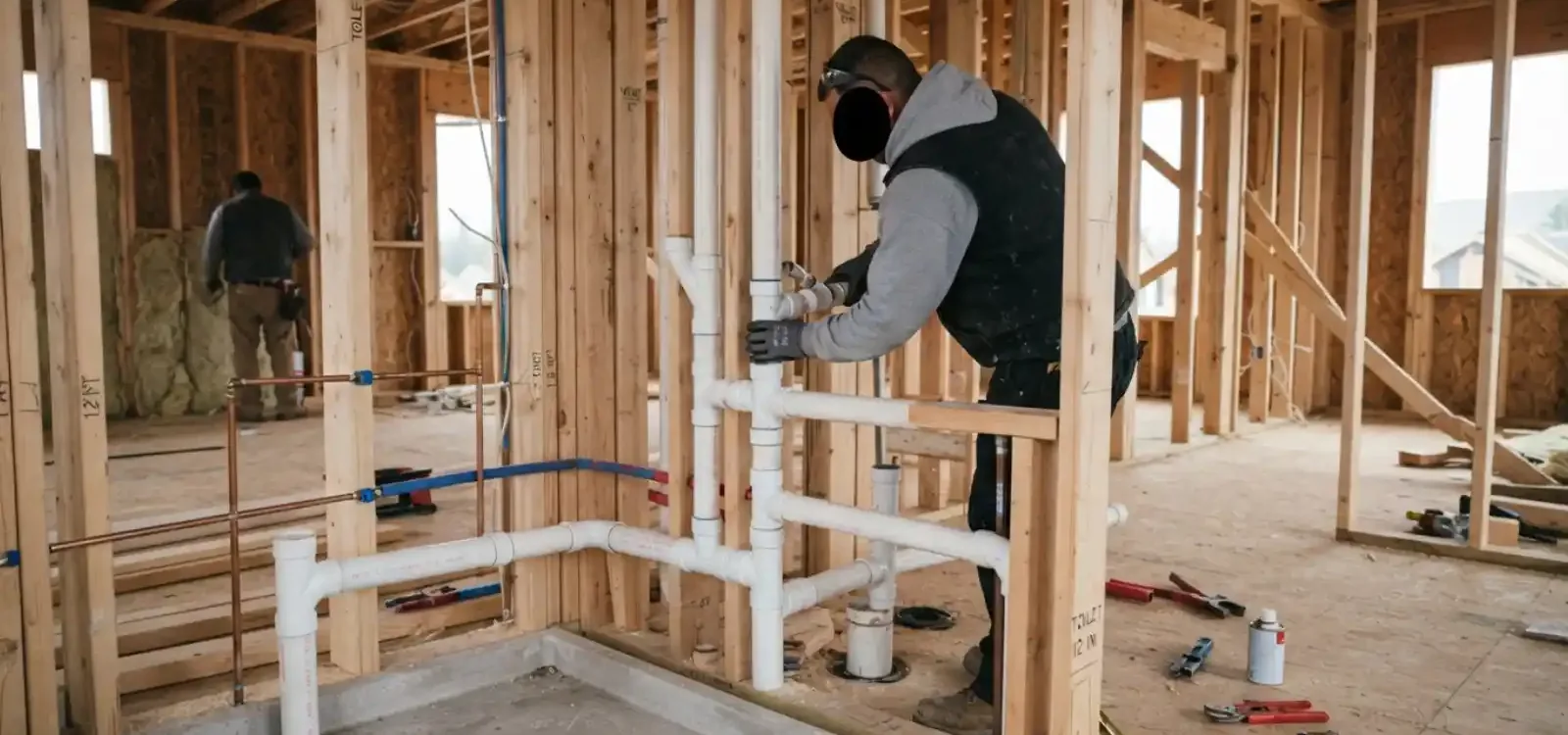
- 3Rough in. Supply and drain lines are run and tested before they are covered. This is the stage the city inspects for larger jobs.
- 4Set fixtures and connect. Toilets, sinks, tubs and appliances are installed and tied to the rough-in.
- 5Test and clean up. Every connection is checked under pressure, drains are flow-tested, and the area is cleaned.
What shapes the cost of a new installation
A number given before the plumber sees the space is a guess. These are the drivers, so you can ask better questions.
Fixtures near current supply and drain lines cost less to connect than ones that need new runs across the house.
An open basement is easy to work in. Slabs, finished walls and tight crawl spaces add labor.
Some fixtures need special valves, venting, a pump or a larger drain. The plumber tells you what yours requires.
Permit work adds fees and scheduling time, and the plumber builds that into the clear price.
Insurance rarely covers new installation, since it is a planned upgrade rather than a loss. A real number needs the plumber to see the space, so call the line and describe the project.
Common questions
Leave the building, avoid switches and phones inside, and call 911 or the gas utility from outside. Once the utility clears the house, call us for the repair or installation.
Yes, in many cases. The key questions are how far the nearest drain and vent are, whether the floor has to be cut, and what the city requires. Ask the Building Division at (440) 490-2081 about the permit and inspection.
Permit rules vary, so ask the North Ridgeville Building Division at (440) 490-2081. Work that alters the water supply or sanitary sewer needs a permit, and inspections are scheduled at least 24 hours ahead.
Yes. The plumber sizes the line, installs it, pressure tests it and checks every joint. The gas utility handles the supply and meter.
Call the line and describe the fixture, the room and what is already there. The plumber looks at the space and gives you a clear price before work starts.
Building in North Ridgeville: city rules that touch plumbing installs
North Ridgeville grew from 13,152 residents in 1970 to 35,280 in 2020, so permit offices see plenty of plumbing work. The city's residential permit application has plumbing options labeled New, Alteration, Replacement and Service Line, so the type of job decides which box is checked.
Inspections must be scheduled at least 24 hours in advance, and water meter set inspections are done with the rough plumbing inspection. A construction water outlet needs a code-approved backflow device, and no building sewer may be opened to connect the building drain unless a Building Division inspector is present. If you plan a basement bathroom, build that notice into your schedule.
All contractors must be registered with the city, and plumbing subcontractors must be registered and approved by the Building Division for the current year. For anything unclear, call (440) 490-2081. Neighboring cities like Avon and North Olmsted have their own offices and rules.
New fixtures and supply lines are installed to the Ohio Plumbing Code, which is built on the International Plumbing Code (IPC).
Signs the job is an installation, not a repair
Sometimes the fix is a new fixture or line instead of another repair. These are the signs.
- The fixture is cracked, corroded or no longer works and parts are hard to find. A new one costs less than repeated service calls.
- You are adding a bathroom, laundry or wet bar where no supply or drain exists yet.
- A new appliance needs a water or gas connection that the old one did not use.
- A remodel changes the layout, so lines have to move to match.
If you are not sure which side of the line your job falls on, describe it to the dispatcher. Often the answer starts with a diagnosis, such as toilet repair or faucet repair, and moves to installation only if the part cannot be saved.
Ready to add or replace plumbing?
Describe the fixture, the room and what is there now. A plumber can look at the space and give you a clear price.
Common installation jobs and what each involves
| Job | What it involves | Planning question |
|---|---|---|
| Toilet install | Flange, wax or foam seal, supply line, shutoff | Is the flange in good shape and the floor solid? |
| Sink and drain install | Faucet, supply lines, trap and drain connection | Does the drain line slope and vent correctly? |
| Bathroom addition | New supply, drain and vent runs, then fixtures | How far is the nearest drain and vent? |
| Gas appliance line | Pressure-tested piping to the appliance, shutoff valve | Who verifies the supply and sizes the line? |
| New-construction rough-in | Full drain, vent and supply layout before walls close | What do the plans and inspector schedule require? |
Gas lines, new builds and PEX: the specialty questions
Gas line inspection and installation
A plumber can inspect existing gas piping and install new runs for appliances. The work includes sizing the line for the appliance load, pressure testing and a leak check at every joint. Ask whether a permit applies, since permit rules vary. The gas utility, not the plumber, handles the meter and the supply side.
New construction plumbing
New-build plumbing starts with the plans. The plumber lays out drain, vent and supply lines before the walls close, and the inspector checks them at the rough stage. Mistakes are easy to fix at rough-in and painful afterward, so questions should come early.
PEX supply lines
PEX is flexible plastic tubing used for supply lines. It bends around framing, so it can mean fewer fittings and less demolition than rigid pipe. It is not used for every job, and your plumber explains where it fits. For worn lines already in the house, see whole house repiping.
Checking a plumber before you hire for an install
Ohio does not require a state license for residential plumbing contractors, though the Ohio Construction Industry Licensing Board licenses commercial plumbing contractors. Check proof of insurance, read the written contract, and ask whether a permit will be pulled.