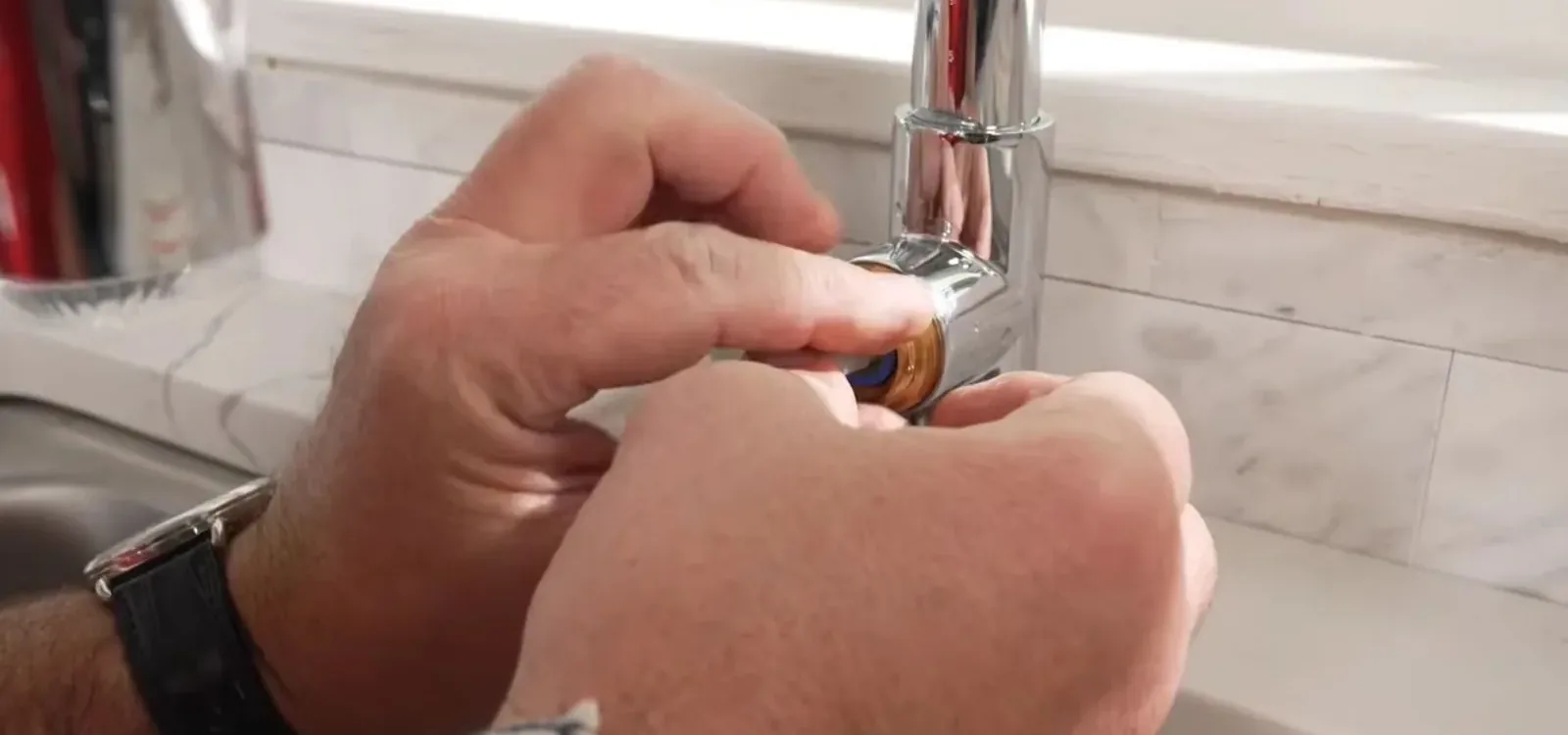
Repair or replace a faucet: the quick decision guide
| What is happening | Usual fix | Replace instead when |
|---|---|---|
| Slow drip from the spout | New cartridge, disc or washer | The body is corroded or parts are no longer made |
| Handle stiff or loose | Clean or replace the cartridge and tighten the handle | The housing is cracked |
| Water at the base of the faucet | O-rings or seals | The faucet is pitted and leaks again |
| Shutoff valve will not close | Replace the stop valve | Always replaced, not repaired |
Replacement makes sense when the faucet is old enough that parts are hard to find, or repairs repeat. Otherwise, a cartridge is usually the smaller job. Ask the plumber to show you the worn part.
Faucets and sinks in North Ridgeville houses
Northern Ohio has hard freezes, and many homes here have basements where supply lines run along cold walls. A pipe or fitting under a sink on an exterior wall is the first to suffer in a deep cold snap. Open the cabinet door on a freezing night so the warm room air reaches those lines.
North Ridgeville requires a permit for changes to the water supply or sanitary sewer, but swapping a faucet in place is a different matter. For anything beyond a like-for-like swap, permit rules vary, so ask the Building Division at (440) 490-2081. Neighbors in Avon follow their own city's rules, which may differ.
Warning signs a faucet or shutoff valve is about to give out
- A drip that gets steadier even after you turn the handle firmly. The seat or the cartridge is worn.
- Green or white crust around the base of the handle or on the supply valve. Mineral and corrosion buildup means slow seepage.
- A shutoff valve that is stiff or leaks around its stem when you turn it. Turning it hard may break it.
- Water spots in the cabinet below the sink, or a swollen cabinet floor.
- A faucet that shakes or knocks when you run it, which can mean a loose fitting or a worn washer.
A supply valve or line has broken: stop the flow first
- Turn off the stop valve under the sink, clockwise. If it is stuck or leaking, do not force it.
- Go to the main water shutoff for the house. Know where it is, usually near the meter or where the line enters the basement.
- Open a lower faucet to drain the line once the main is off, so pressure drops.
- Mop up and move items from the cabinet. Water under a sink soaks particleboard quickly.
- Call the line and tell the plumber whether the water stopped, so they bring the right parts.
A burst or broken supply valve is often an old fitting that finally let go. For a burst pipe in the wall rather than at the fixture, see burst pipe repair.
Faucet or valve spraying water?
Shut off what you can, then call. The plumber can tell you what part to expect.
How a plumber repairs a leaking faucet
- 1Identify the faucet type. Cartridge, ceramic disc, compression and ball designs fail in different ways, so the repair starts with the right diagnosis.
- 2Shut off and drain. The plumber closes the stop valves, opens the faucet, and removes the handle and trim.
- 3Inspect the parts. A scored cartridge, a flattened washer, a pitted seat or a dried O-ring shows where water gets past.
- 4Replace what is worn. Matching parts go in, and the seat is cleaned or replaced if it is rough.
- 5Test under pressure. The plumber runs hot and cold, checks under the sink for drips, and clears the aerator.
Shower valves, showerheads and tub faucets
A shower that drips after you shut it off usually has a worn cartridge in the valve behind the wall. A showerhead that sprays sideways may only need descaling. A tub spout that leaks when the shower runs has a failed diverter. Each has a different fix, and a plumber tells them apart in minutes.
Replacing a valve cartridge often means opening the trim and sometimes removing a section of tile or an access panel behind the wall. That is why an honest estimate comes after a look. Our leak detection page covers what to do if you suspect water is also getting into the wall.
If a shower or tub drains slowly, hair and soap on the stopper or in the trap are the usual cause. A plumber removes the stopper, clears the trap with a small cable, and checks the line behind it. A bathtub that fills while the sink drains points to a bigger problem, and drain cleaning explains that case.
Cartridges, spigots and utility sinks
Outdoor spigots in northern Ohio suffer from freezing. A hose left attached in winter holds water in the pipe, which can crack the fitting inside the wall. If a spigot drips from the stem or leaks inside the basement when the hose is on, shut off the supply and call.
Utility sinks in basements and laundry rooms take hard use. They often have older faucets, galvanized or copper supply lines and slow drains. The plumber checks all three, and if the drain is the trouble, the same approach as other drain clogs applies.
What decides the cost of a faucet or valve repair
A faucet repair can be simple or can turn into a wall job. These are the factors, and a clear price comes after the plumber sees which one you have.
Common cartridge faucets are quick. Older or specialty models may need rare parts, or may be better replaced.
A working stop valve lets the plumber isolate the fixture. A stuck or leaking valve has to be replaced first, which adds work.
Under-sink repairs are simple. A shower valve behind a tiled wall may need an access panel cut.
A drip may be only a worn washer. A leak in the supply line or a failed valve body is a larger repair.
After-hours and weekend emergencies are priced differently from daytime appointments, and you hear which applies before work starts.
Homeowner policies often cover sudden accidental water damage but not a slow drip or worn parts. Ask your insurer where that line sits. For a number on your fixture, call and describe the faucet and the leak.
Common questions
Yes. The line is open 24/7. If a faucet or supply valve is spraying water, shut the main and call.
Dripping from the spout, a stiff or loose handle, or trouble getting a steady temperature all point to a worn cartridge. A plumber can pull the old one and match the new part.
Do not force it. Turn off the main water valve, then call. Old stop valves often break when turned, and replacing the valve is part of the repair.
Yes. The cartridge or the valve body is replaced after opening the trim, and sometimes an access panel. A plumber explains what is needed before cutting anything.
If the body is sound and the part is available, repair is the lower-cost route. If the faucet is corroded, parts are scarce or repairs repeat, replacement is usually wiser.
Mineral buildup in the aerator or a clogged cartridge is the usual cause. Unscrew the aerator and rinse it, and if pressure stays low, a plumber checks the supply line and valve.