Common questions
Codes point to a group of problems: ignition, flame, venting, flow, overheating or temperature. Scale and a clogged filter trigger several of them. Write the code down and call, and the plumber will check the likely causes in order.
Lukewarm output usually means low flow, a scaled heat exchanger or too many fixtures running at once. A flush often fixes the first two. Sizing is the third, and it needs a look at the unit.
That cold gap happens when the unit shuts off between short uses and restarts. A faucet opened too far, a low-flow fixture or a mixing problem between taps can cause it.
It depends on your water and how heavily you use it, so follow the maker's guidance and shorten the gap if you notice slower hot water or noise. Testing your tap and asking Public Utilities at (440) 490-2049 for the annual report helps.
Some owners do, if the unit has isolation valves and they follow the maker's steps with the gas or power off. A plumber is the better choice if there are no valves or the unit has been neglected.
Often. It burns a lot of gas at once, so the line must be sized for the whole unit plus every other appliance. The plumber checks that before any quote.
It depends on the house and how you use hot water. You gain endless hot water and space, and you take on venting, gas or electrical upgrades and regular descaling. An honest answer comes from a look at the home.
Yes. The plumber reads the model, checks the code and the supplies, and tells you if the unit is serviceable before work starts.
Your tankless heater needs service: error code, lukewarm water or shutting off
Tankless units tell you what is wrong in small ways before they quit. Match what you notice to the likely cause, and write down any code shown on the display.
- Lukewarm or swinging temperature. Scale on the heat exchanger, a dirty inlet screen or a flow rate too low for the unit to fire.
- A cold burst between two hot ones. Common after a short pause, and often a sign of low flow or a mixing issue between fixtures.
- An error code. Codes differ by maker, so check the manual. They usually fall into groups: ignition, flame, flow sensor, venting, overheating and water temperature.
- Reduced flow at every hot tap, cold water normal. The inlet filter or the heat exchanger is restricted.
- Rumbling, popping or tapping when it runs. Scale is trapping water against hot metal.
- Won't light at low flow, for example when a faucet is barely open. Most units need a minimum flow to start.
When you call, say what the code is and what you were doing when it appeared. That narrows the cause before anyone arrives. A conventional tank problem is a different job, covered by water heater repair.
How a tankless heater is diagnosed and put right
- 1Read the code and history. The display and the unit's stored faults show what it last complained about.
- 2Check the supplies. Gas pressure and line size for gas units, the circuit and voltage for electric ones, and the water flow into the unit.
- 3Clean the inlet filter. A small screen at the inlet collects debris and cuts flow.
- 4Inspect venting and combustion air. A blocked vent or a crushed condensate line can lock out a gas unit.
- 5Test the temperature rise. Comparing inlet and outlet temperature shows whether the heat exchanger is restricted.
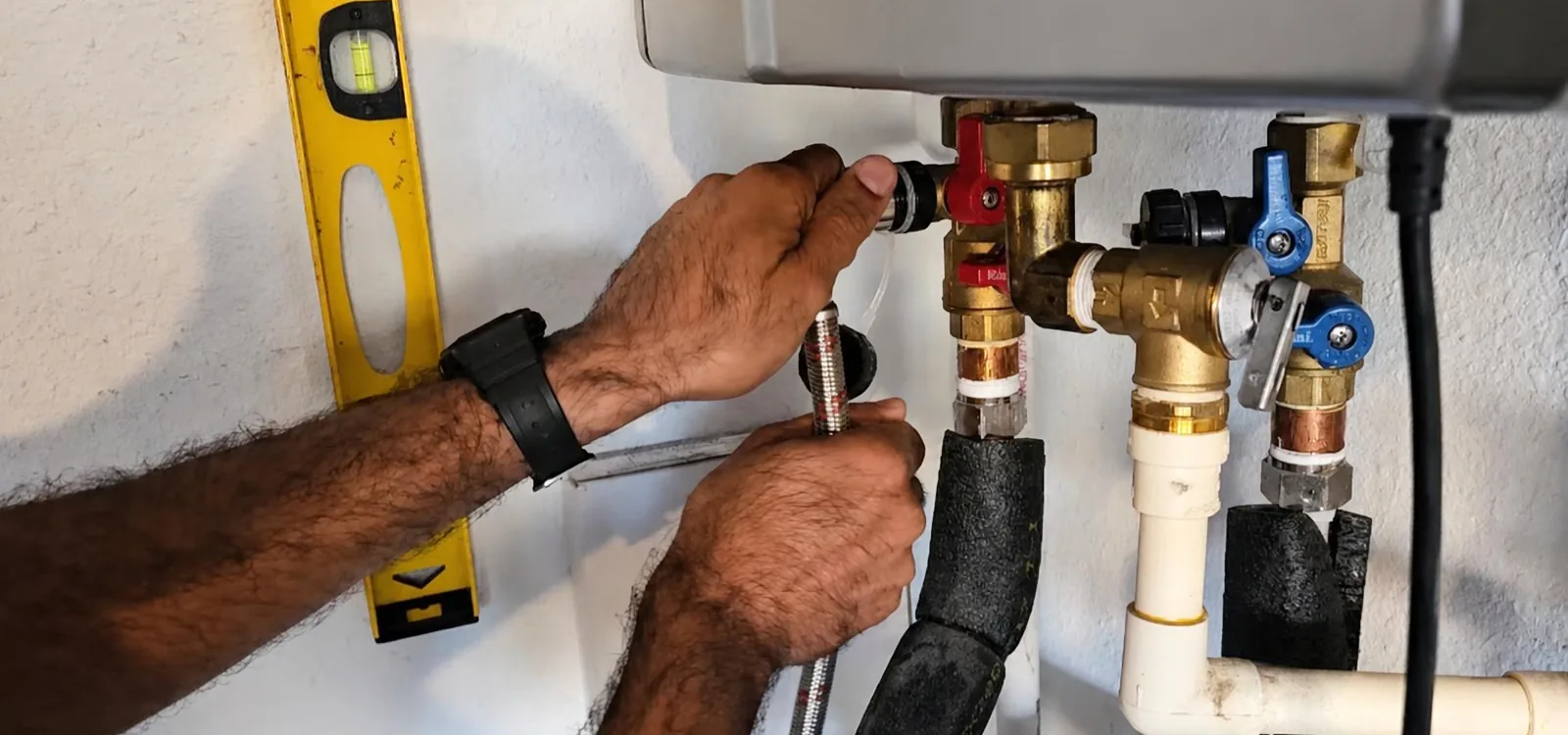
- 6Flush if scale is the cause. Isolation valves let the plumber circulate a descaling solution through the unit.
Units that were installed without isolation valves are harder to service. Adding service valves at the right time makes every later flush simpler.
Gas, electric or a conventional tank: which one fits
| Option | Good fit | Watch for |
|---|---|---|
| Condensing gas tankless | Gas available and a high-efficiency unit wanted | Needs a condensate drain and plastic venting |
| Non-condensing gas tankless | Existing metal vent path can be reused | Hotter exhaust and more demanding vent materials |
| Whole-house electric tankless | No gas in the house, or an upgraded panel | Very high electrical load, and the incoming water temperature limits output |
| Point-of-use electric | One distant sink or bath | Serves one location only |
| Conventional tank | Modest demand and the lowest complexity | Standby heat loss and a limited hot supply |
If a tank is the better match, water heater installation covers that planned swap. Not every house needs tankless, and an honest comparison starts with how much hot water runs at once.
North Ridgeville homes, permits and the water going through the heater
North Ridgeville's residential permit application has a plumbing section with Alteration and Replacement options and asks for the water heater's fuel type and capacity. Moving from a tank to a tankless unit changes gas size, venting and water connections, so permit rules vary. Ask the Building Division at (440) 490-2081. If a permit applies, inspections must be scheduled at least 24 hours in advance.
The Ohio Plumbing Code, built on the International Plumbing Code (IPC), is the standard the vent, gas line and relief connections have to meet.
Homes on the other side of Lorain Road in North Olmsted fall under that city's own permits and utilities, so ask the right office.
Scale is the main enemy of any tankless unit, and it depends on your water. Test your tap, and ask the City of North Ridgeville Public Utilities Division at (440) 490-2049 for its annual water quality report. If minerals turn out to be a problem, water softener and filtration is worth weighing before a new unit goes in.
Need a flush or a new unit?
Call and describe the heater. A plumber will tell you what the symptoms point to before any work starts.
Five questions to settle before buying a tankless heater
- Can the gas line carry it? Tankless units pull a lot of gas at once, and an older line may be too small.
- Where will it vent? A condensing unit vents through plastic pipe, and a non-condensing one needs materials rated for hot exhaust.
- How much hot water runs at the same time? Two showers and a dishwasher together decide the output you need.
- Does the panel have room? Electric units need a large dedicated circuit, and an electrician handles that work.
- Where does condensate go? Condensing gas units make acidic condensate that needs a proper drain, often with a neutralizer.
Cold winters matter too. Incoming water is colder in northern Ohio winters, which means the unit must work harder to raise the temperature, and a unit sized only for summer can disappoint.
Flushing and descaling a tankless water heater
Minerals in water bake onto the heat exchanger as the unit runs, forming scale. Scale insulates the metal, so the unit works harder, runs hotter and eventually throws a code. A descaling flush removes it before it does lasting damage.
A flush starts with the power or gas off and the water shutoffs closed. The plumber connects hoses to the isolation valves, circulates an approved descaling solution through the heat exchanger with a small pump, then rinses with clean water. The inlet filter gets cleaned at the same time.
How often it is needed depends on your water and how much hot water you use, so there is no single schedule. Follow the maker's guidance, and flush sooner if you notice longer waits for hot water or odd noises. If the unit has no service valves, adding them comes first. Persistent trouble after a flush may mean a failing part, which is a repair question for a repair visit.
Electric tankless: when it works and what the panel must carry
An electric tankless heater has no flame, vent or gas line, which makes it simple to place. The catch is the electrical draw. A whole-house unit needs a heavy dedicated circuit, and many older panels cannot spare it without an upgrade, which is electrician's work.
Output also depends on incoming water temperature. In the cold months an electric unit may not raise water as far as a gas one, so expectations should match the size. Small point-of-use units suit a far sink or a bathroom addition, where waiting for hot water is the main complaint.
What decides the cost of tankless service or installation
A flush and a full installation are very different jobs, and the factors below apply to both in different ways.
A flush and filter clean is a short visit. A new installation includes the unit, connections, venting and testing.
Gas and electric models, and larger outputs, cost more to buy and need different supporting work.
A larger gas line or a heavier circuit can be a major part of the job, and the electrical side is separate work.
Stainless or plastic vent pipe, wall penetrations and a condensate drain with neutralizer are all added work.
Service valves, a recirculation setup or a pressure-relief and expansion arrangement add parts and labor.
Insurance generally covers sudden accidental water damage, not scale buildup or normal wear, and a flush is maintenance rather than a claim. For a real number, call the line, describe the unit and what it is doing.