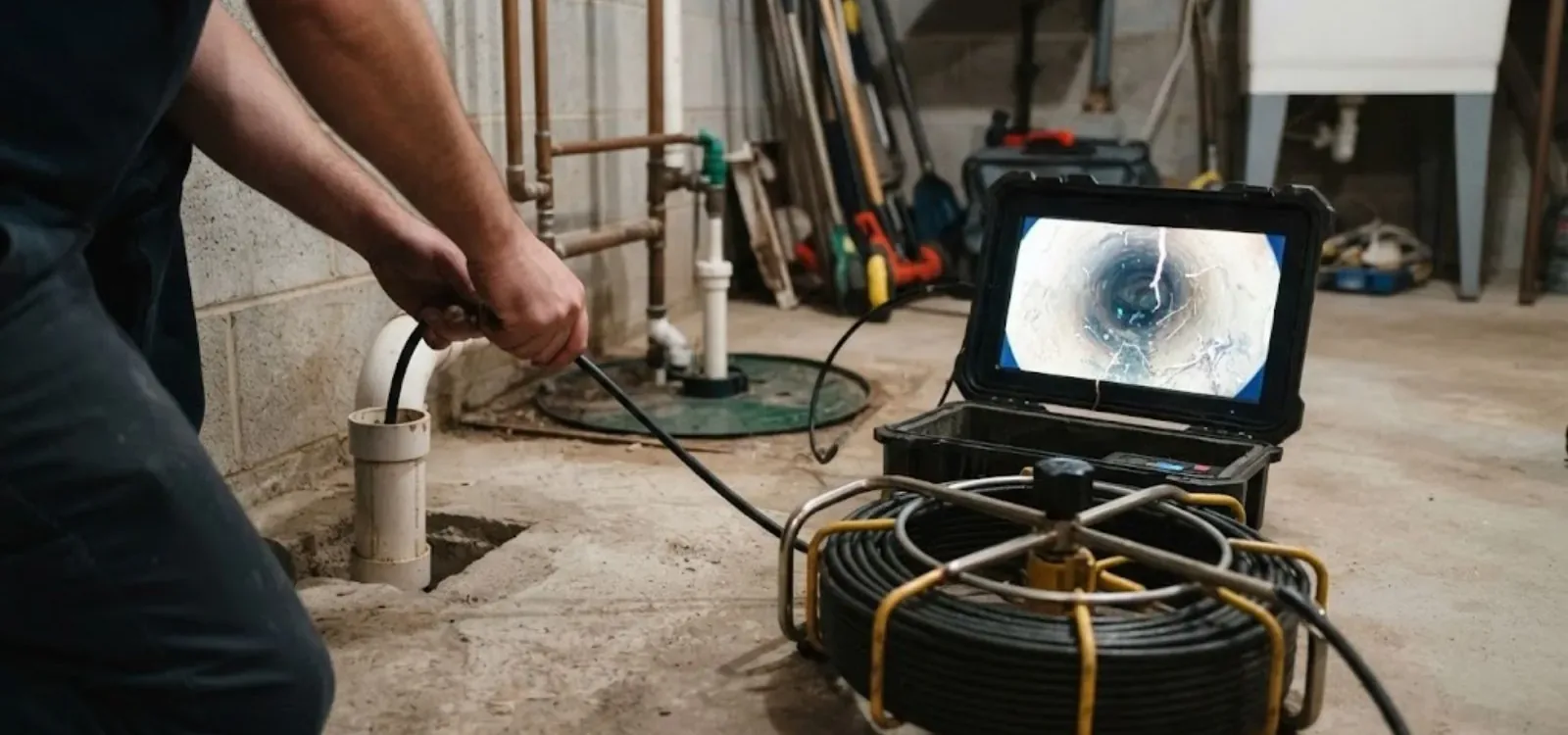
Which camera visit matches your reason for calling
The camera is the same tool every time, but the question you ask it changes what the visit looks like. Pick the row closest to your situation and tell the dispatcher, so the right equipment is on the truck.
| Your situation | What the plumber does | What you walk away with |
|---|---|---|
| Buying a house with an older sewer | Runs the camera from the cleanout toward the street | Video of the pipe condition before closing |
| The same drain backs up again and again | Looks for roots, a sag or a broken joint | A reason for the repeat clog, not another guess |
| A line was just cleaned | Re-runs the camera after the cleaning | Proof the pipe wall is clear |
| Slow drains in several fixtures | Checks the main before any digging | Whether the trouble is the main or a branch |
| You need to know where the line runs | Uses a locator on the camera head | A surface mark above the problem spot |
A visit that follows a hard clog often pairs well with sewer line cleaning, since the camera shows how much cleaning the pipe actually needs.
The sewer line between your house and the street
Your home's waste leaves through a private line and meets the city sanitary sewer. The Public Utilities Division bills sanitary sewer service to more than 15,000 accounts, and the interceptor lines carry the flow to the French Creek Wastewater Treatment Plant in Sheffield Village. The camera lets you see which side of that handoff the trouble lives on.
That matters because the private line is yours to fix and the main is not. If the footage shows a clean pipe up to the connection, the Public Utilities Division at (440) 490-2049 is the right next call. If it shows damage on your side, the repair is your project.
Repairs that open the building sewer carry a city rule: no building sewer may be opened to connect the building drain unless a Building Division inspector is present. Knowing the exact damage spot from video helps you plan that inspection. Neighbors in Avon share the same treatment plant, but each city runs its own permits.
Warning signs that call for a look inside the pipe
You do not need a full backup to justify a camera. These patterns point to something a cable cannot explain.
- A basement floor drain gurgles when the washer drains or a toilet flushes upstairs. Air is being pushed past a partial blockage.
- Cleaning helps for a few weeks and then the clog returns. Roots or a rough joint are catching waste again.
- A damp, sunken or unusually green patch shows up in the yard along the line. A cracked pipe may be leaking into the soil.
- Several fixtures slow down together, which suggests the shared main rather than one sink trap.
Need video of your sewer line?
Describe the backup or the home purchase and a plumber will schedule a camera visit, same day when a slot is open.
Buying an older house here: scope the sewer before closing
A general home inspection looks at the visible plumbing. It usually cannot see the pipe buried between the foundation and the street. A camera run before you finalize the purchase shows whether the line is sound, and the video gives you something concrete to bring to the seller.
North Ridgeville grew from 13,152 residents in 1970 to 35,280 in 2020, so many homes are of modest age, but the pipe material still varies house to house. A camera tells you the material and condition of the line you are inheriting, instead of leaving that to the age of the neighborhood.
How the inspection runs, step by step
- 1Find the entry point. A cleanout cap, a pulled toilet or an opened trap gives the camera a way into the line.
- 2Feed the camera forward. A flexible push rod carries a sealed camera head with lights. The plumber watches a live monitor as it moves.
- 3Track depth and position. A locator tuned to the camera head lets the plumber mark the ground above any defect on the surface.
- 4Pause at defects. Roots, offset joints, cracks, scale and low spots (called bellies, where water pools) are noted as they appear.
- 5Record and review. The footage is saved and walked through with you, with problem spots tied to the surface marks.
Using the camera before and after a cleaning
A camera before cleaning tells the plumber whether a cable is enough or whether the pipe wall needs scouring. Grease and scale respond to hydro jetting, while a simple soft blockage may not. Without the video, the tool choice is a guess.
A second pass afterward answers the question every homeowner has: did it work? The after footage shows a clear wall and open joints, or it shows that roots have grown back into a seam and the clog is coming back.
What the footage can and cannot tell you
The video shows the inside of the pipe in plain detail: material, joints, cracks, roots, scale and where water pools. It also shows where the line bends and, with a locator, how it runs under the yard.
It cannot show a leak that is not visible on the pipe wall, it cannot see through a fully blocked section, and it cannot tell you how much soil has shifted around the pipe. A camera also cannot judge whether a repair will hold, only whether the pipe is damaged now.
What shapes the price of a sewer camera visit
A fair number depends on the line, so the plumber gives you a clear price before work starts. These are the factors that move it.
A working cleanout is the quick route. If the plumber has to pull a toilet or cut access, the visit takes longer.
A clogged line must be opened before the camera can see anything. That adds a cleaning step and sometimes a second visit.
A short run to the foundation is a smaller job than a long run out to the street.
Marking the surface above a defect takes extra time and gear. It saves digging in the wrong place later.
Insurance usually does not pay for an inspection that is purely for information, though a policy with sewer backup coverage may care about the findings. A real number needs the plumber to see the access point, so call the line and describe your situation.
Common questions
Yes, in most cases. A transmitter in the camera head sends a signal the plumber follows above ground, then marks the spot. Deep or heavily cluttered areas can make the signal harder to read, and the plumber says so.
It is a good idea if the house has an older sewer line, trees near the path to the street, or any history of backups. The video shows the line you would own and gives you a basis for negotiating.
No. It diagnoses. Cleaning, jetting or repair is a separate step, and you get a clear price for that step before it starts.
Both, when the camera can reach. Smaller heads fit floor drains and branch lines, though tight bends and traps limit how far they go.
The North Ridgeville Public Utilities Division handles the city side at (440) 490-2049, Monday to Friday during business hours. Bring the footage so they can see where the trouble starts.