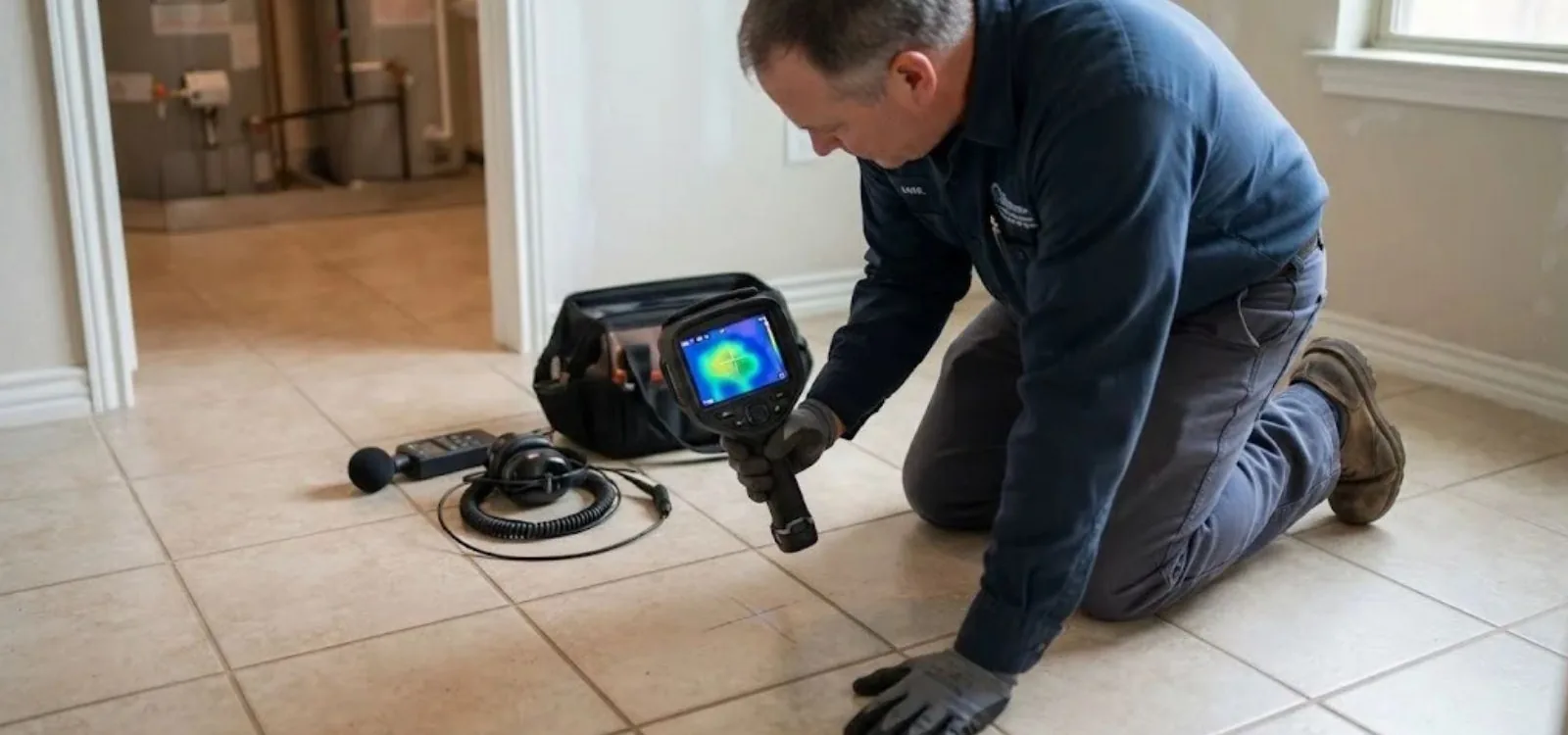
Which method finds which kind of leak
| Where you suspect water | Tool used | What it shows |
|---|---|---|
| Anywhere, bill is up | Meter and pressure test | Whether water is leaking at all, and on which side of the shutoff |
| Inside a wall or ceiling | Moisture meter and thermal camera | Wet material and temperature differences behind the finish |
| Under a floor slab | Acoustic listening and tracer gas | The sound or escape point of a pressurized pipe |
| Underground between meter and house | Ground microphone | A running leak under soil or lawn |
| Inside a drain or sewer line | Camera | Cracks, offsets and standing water in the pipe |
No single instrument works everywhere. A good visit starts with quick tests and moves to heavier tools only when needed.
Meters, bills and basements around North Ridgeville
The City of North Ridgeville Public Utilities Division bills water and sanitary sewer service to more than 15,000 accounts, and its website lists water meter pages and a water meter replacement program. Your own meter is the best first tool you have, and the Public Utilities Division at (440) 490-2049, open Monday to Friday 8:00 a.m. to 4:30 p.m., can answer billing questions.
Basements are common in northern Ohio, and finished ones hide plumbing behind drywall and ceiling tile. Freezing winters and spring thaw stress pipes and joints, and slow leaks often start there.
If the leak turns out to be in a pipe that has burst, see burst pipe repair. If the water line outside is the source, water line repair covers the section from the meter to the house.
Nothing is dripping, but something is wrong: signs of a hidden leak
Most hidden leaks show up as symptoms, not puddles. These are the ones that justify a visit.
- A water bill that jumps with no change in how many people live in the house.
- A meter that moves when every faucet, toilet and appliance is off.
- A stain that grows on a ceiling or wall, or paint that bubbles or peels.
- The sound of running water in a quiet house at night.
- A damp, musty smell in a basement, or carpet that feels wet near an exterior wall.
- A warm patch on the floor or a hot water heater that runs more than it should. A hot line may be leaking under a slab.
- Lower water pressure throughout the house, or a lawn that stays soggy in one spot.
Water going where it should not?
Tell us what the meter, the ceiling or the floor is doing and a plumber will plan the search.
Water is spreading right now
A visible leak that is getting worse is an emergency. A few steps limit the damage while you wait.
- Shut the main water valve, usually near where the line enters the house or beside the meter.
- Stay clear of electrical areas that are wet, and do not use appliances standing in water.
- Open a faucet at the lowest level to drain the lines once the main is closed. Pressure falls and the leak slows.
- Move belongings away from the water and photograph the damage for your insurer.
How a plumber locates a leak without opening walls
- 1Isolate the system. Close fixtures, check the meter and test whether water is leaking on the supply side, the drain side or from an appliance.
- 2Pressure test. Gauges on the supply lines show whether pressure holds. A drop means a leak. A steady reading rules the supply out.
- 3Listen. Acoustic equipment hears the hiss of pressurized water escaping, and the sound is loudest closest to the leak.
- 4Scan. A moisture meter reads dampness in drywall and wood. A thermal camera shows temperature differences from wet material or a hot line.
- 5Trace and confirm. Tracer gas or dye follows hard-to-find lines. A sewer camera runs through drain lines when the leak is on the waste side.
- 6Mark the spot. The plumber marks the leak location so a repair opens as little as possible.
The water meter test for a high bill
A leak with no visible water can still be proven in a few minutes. Turn off every faucet and appliance, then look at the meter's small leak indicator or low-flow dial. If it moves, water is escaping somewhere.
Next, close the main valve at the house. If the meter stops, the leak is inside. If it keeps moving, the leak is on the line between the meter and the house. Toilets are a frequent culprit, so listen at each one before assuming a hidden pipe. A flapper that does not seal can run all day. See toilet repair if that is the case.
Stain on a ceiling or wall: finding the source above it
Water travels. A ceiling stain is rarely directly under the leak, because water follows framing, pipes and wires before it shows up. A moisture meter and thermal camera trace the wet path back toward its source, which is often a supply line, a shower valve, a tub drain or a bathroom above.
Do not repaint until the source is found and the area is dry. If the material is saturated, a plumber may open a small inspection hole to confirm the leak, then patch it.
Under the house or in the crawlspace
Homes with a crawlspace or an unfinished basement ceiling let a plumber look at supply lines, drain lines and fittings directly. A flashlight and a moisture meter can often find a drip from a corroded joint or a failed valve.
Dirt that stays wet, a musty smell, mold on joists or insulation hanging from the floor above all point to water coming from somewhere.
How slab leaks show up
A slab leak is a pressurized water line that has failed under the concrete floor. Signs include a hot spot on the floor, the sound of running water with all fixtures off, a meter that spins, and damp carpet or cracked flooring.
Acoustic listening and tracer gas locate the leak without breaking the slab. Once it is pinpointed, the options are to cut a small section open and repair the pipe, reroute the line through walls or ceiling, or in some cases replace the supply with whole house repiping. The right answer depends on pipe age and how many leaks have shown up.
Buried lines, sprinklers, pools and meter boxes
A leak in the buried water service line usually shows as a soggy patch in the yard, a loud meter, or low pressure in the house. A ground microphone traces the sound along the line, and the repair is often a spot dig rather than a full trench.
Sprinkler systems leak at heads, valves and underground fittings. Closing the irrigation supply and watching the meter separates a sprinkler leak from a house leak. Wet turf around a head or valve box is the usual giveaway.
Pool and spa leaks are a different trade. We can check the house supply and equipment lines, but a leaking pool shell or liner is for a pool specialist. A wet or flooded meter box at the street is the city's side of the shutoff, so call the Public Utilities Division at (440) 490-2049 first.
Commercial buildings and leak detection
Shops, restaurants and offices have longer pipe runs and more fixtures, so locating a leak takes more time. We can run the same meter, pressure and acoustic tests in a commercial space. See commercial plumbing for what else we handle.
What decides the cost of finding a leak
Detection pricing depends on how hard the leak is to find. The plumber explains which of these apply before work starts.
A leak at a visible valve is quick. One in a ceiling, wall or slab needs instruments and more time.
A meter check is simpler than acoustic listening, thermal imaging or tracer gas, so the plumber starts with the simplest test that can answer the question.
A small ranch is quick. A large home with two floors and a finished basement has more to trace.
Locating the leak and repairing it are separate jobs. You hear the price for detection first, then for the repair.
Emergency visits at night or on weekends are priced differently from a planned daytime appointment.
Many homeowner policies cover sudden accidental water damage and sometimes the cost of locating the leak, but not slow leaks from wear. Ask your insurer which applies. A real number needs a plumber to look, so call the line and say what you are seeing.
Common questions
Yes. The line is open 24/7, including nights, weekends and holidays. If water is spreading, close the main valve and call.
Turn everything off and watch the meter. If it moves, water is escaping somewhere. Close the main valve at the house. If the meter stops, the leak is inside. If it keeps moving, the leak is on the line toward the street. Then call and describe what the meter did.
A moisture meter and a thermal camera read dampness and temperature through the finish. Acoustic equipment can hear pressurized water. Together they narrow the leak to a small area before any cut is made.
Yes, usually. Acoustic listening and tracer gas pinpoint a pressurized leak under concrete. Once found, the plumber explains whether a spot repair, a reroute or a repipe makes sense.
Water travels along framing, so the source is often several feet away. Look for a bathroom, a laundry area or a supply line above. A plumber can trace the wet path with a moisture meter.
The meter box sits on the city's side of the shutoff. Call the North Ridgeville Public Utilities Division at (440) 490-2049 on weekdays from 8:00 a.m. to 4:30 p.m. If water is spilling into your house, close your own main valve and call us.
We can check the sprinkler supply and the pipe that feeds a pool. A leaking pool shell or liner needs a pool specialist.
Yes. You get a clear price before the visit begins. If the plan changes after the first tests, work stops until you agree.