Common questions
Yes. The line is open 24/7. If your tank is leaking at night, close the cold supply valve above it, cut the power or gas, and call.
Water seeping from the base or lower seam of the tank means the steel has corroded and no part will fix it. Water from a fitting, the drain valve or the relief valve is often a repair. A plumber can tell the difference in one look.
Usually yes, if you have the space, an electric circuit that can carry it and a place to drain condensate. It takes more planning than a like-for-like swap, so most people choose the same type in an emergency and plan the change later.
Size depends on how many people use hot water and when. The plumber looks at your household, the old tank's label and the space available. Bigger is not always better, because oversized tanks cost more to heat.
The city application has a Replacement category and asks for fuel type and capacity. Permit rules vary, so ask the North Ridgeville Building Division at (440) 490-2081 whether your swap needs one.
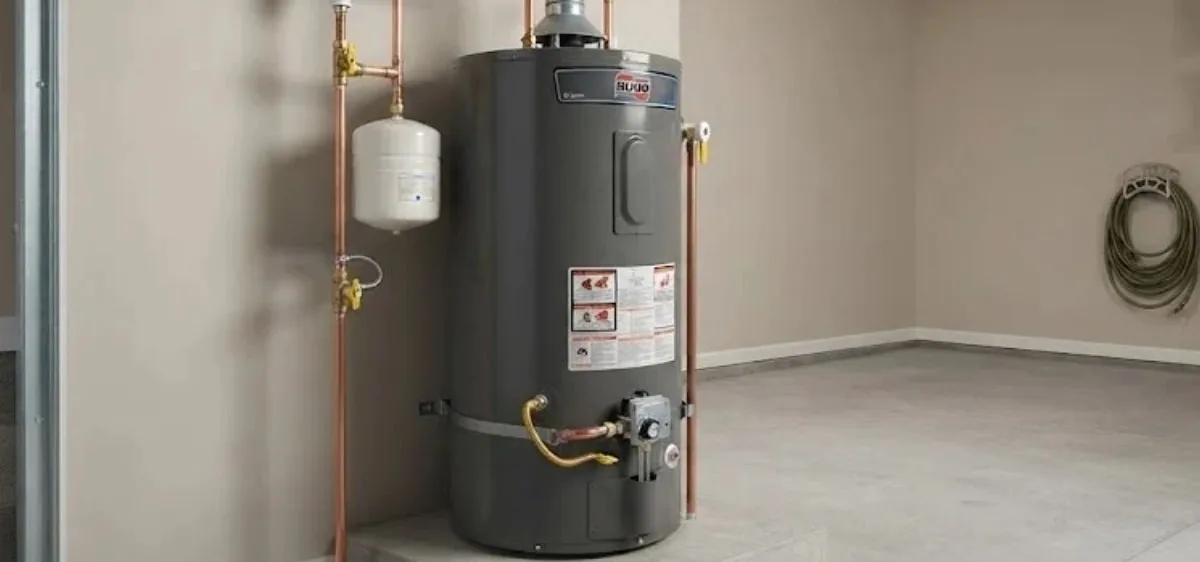
It is a small tank on the cold supply that absorbs pressure when water heats up. Homes with a check valve or pressure reducer on the supply often need one. The plumber checks your pressure and tells you.
Yes, removal of the old tank is part of the job. Tell the plumber about stairs or tight turns on the call so the right help is on the truck.
Signs the tank itself has failed
Some heater problems are parts. Others mean the steel tank is finished. These are the signs that tilt toward a replacement.
- Water at the base of the tank that keeps coming after you tighten the fittings and the drain valve. The shell has corroded from the inside.
- Rusty water from hot taps only. Cold water is clean, so the rust comes from inside the heater.
- A tank that groans or pops as it heats. Hardened sediment sits under the water and the lower tank wall is cooking.
- Repeat repairs in a short stretch. A new element today and a new valve next month usually means the tank is wearing out as a whole.
- Rust flakes or stains around the base or under the jacket that return after cleaning.
If you are not sure, a plumber can test before you commit. Water heater repair is the right call when the tank is sound and only a part has failed.
How a tank swap goes, from shutoff to first hot water
A like-for-like swap is not complicated, but each step protects something. Skipping one is how leaks and failed inspections happen.
- 1Shut off and drain. Power or gas goes off, the cold supply closes, and the old tank drains to a floor drain or hose outside.
- 2Disconnect and remove. Water lines, gas line or electrical, and the flue are separated, and the old tank is carried out.
- 3Set and level. The new tank goes on a stable base, with a drain pan where the room needs one.
- 4Reconnect water and fuel. New flexible connectors, a shutoff valve that closes properly, and a gas line tested for leaks on gas units.
- 5Fit the safety parts. A pressure relief valve with a discharge pipe pointing down, and an expansion tank where the system calls for one.
- 6Fill, purge and test. The tank fills with a hot tap open to push out air, then power or gas comes back on and the plumber checks for leaks and proper venting.
The old tank leaves with us, so you do not have to move a heavy rusted cylinder up basement stairs.
Standard tank, heat pump or tankless: what you are choosing between
| Option | Best fit | What it changes |
|---|---|---|
| Standard gas tank | House already has gas and a good flue | Simplest swap, venting must be checked |
| Standard electric tank | No gas, or gas not wanted | Needs the right circuit and breaker |
| Heat pump hybrid tank | Roomy basement, electric supply, wish to cut running cost | Needs space, a condensate drain and air around it |
| Tankless gas or electric | Wish for endless hot water or freed floor space | Larger gas line or electric service, new venting |
| Same size, same fuel | Fastest emergency fix | Less to permit and inspect |
An emergency swap is usually same fuel and same size because it is the fastest. If you want a different type, a planned install gives time to size gas lines and venting properly. See tankless water heaters for that route.
Permits, inspections and registered contractors in North Ridgeville
North Ridgeville's residential permit application has plumbing categories for New, Alteration, Replacement and Service Line work, and it asks for the water heater fuel type and capacity. That is why we ask those two things when you call. Permit rules vary, so ask the North Ridgeville Building Division at (440) 490-2081 whether your swap needs one.
A replacement still has to meet the Ohio Plumbing Code, which is built on the International Plumbing Code (IPC), so valves and venting are brought to current standards.
If a permit applies, inspections must be scheduled at least 24 hours in advance, so plan a day for that even when the heater went in the same day. All contractors must be registered with the city, and plumbing subcontractors must be approved by the Building Division for the current year. Ohio does not require a state license for residential plumbers, so ask for proof of insurance and read the contract.
Neighbors in Elyria deal with a different building department, so a heater moved or upgraded there follows Elyria's rules instead of North Ridgeville's.
Tank dead or flooding?
Tell us the fuel type and where the tank sits, and a plumber will plan the swap.
Tank down tonight: what to do before the plumber arrives
A failed tank can drain every gallon it holds across the floor. Acting quickly keeps the damage small.
- Close the cold supply valve above the tank. If it will not turn, shut the main water valve for the house.
- Cut power or gas: flip the breaker for an electric unit, or turn the gas control to off. If you smell gas, leave and call the gas utility or 911 first.
- Keep your feet dry near the tank if water is close to outlets or the panel.
- Move belongings off the floor and away from the spreading water. Wet cardboard and carpet go first.
- Take a photo of the tank label showing fuel type, capacity and model. It speeds up matching a new unit.
When water has spread, a wet vacuum helps, but wait to plug anything in until the area is dry. Document the damage for your insurer.
Why tanks fail from the inside, and what the anode rod does
Every steel tank has a glass-like lining, and the water inside it is always trying to find the steel. The anode rod is a rod of softer metal hung in the tank. It corrodes first so the steel does not. Once the rod is gone, the tank wall takes the damage.
That is why a tank can look fine for years and then leak with no warning. A spent anode rod, sediment baking on the bottom and house water pressure that runs high all shorten a tank's life. A thermal expansion tank on the supply line absorbs the pressure rise when the water heats, and its absence is a common reason relief valves weep.
Whether the water you drink is hard or soft is a separate question. If you want to know what is in your tap, test it and ask your water utility for its annual water quality report. Water softening and filtration can be added afterward if the results call for it.
Replacing gas with a heat pump water heater
Plenty of homeowners ask about swapping a failed gas tank for a heat pump hybrid. It can be done, but it is not a same-day swap of one box for another. The heat pump unit draws heat from surrounding air, so it needs open space, a condensate drain, and an electric circuit sized for it.
Basements are common in the area, and they often have the room. They also run cooler, and a heat pump unit will chill the space slightly as it works. The old gas line has to be capped by a qualified person, and the flue is removed or sealed so it does not leak into the house.
Because of that extra scope, most people pick a like-for-like unit in an emergency and plan the switch later through water heater installation. Ask about it when you call, and the plumber can tell you what your house would need.
What shapes the price of a replacement
A replacement price is built from a short list of things. The plumber walks through yours before any work starts.
A standard tank costs less than a heat pump hybrid or tankless model. Capacity matters too, because a bigger tank costs more and needs more room.
Gas units need a safe flue and a gas line that tests clean. Electric units need a circuit that carries the load. Either can require upgrades in older homes.
New connectors, a relief valve with a discharge pipe, an expansion tank and a drain pan where needed are part of doing the job properly.
Stairs, tight turns and a low ceiling slow the job. Hauling off a corroded old tank is part of the work.
After-hours and weekend emergency visits are priced differently from a planned daytime install, and you are told which applies upfront.
Standard homeowner policies tend to cover sudden accidental water damage but not a tank that wore out, and they do not buy the new heater itself. A burst tank sometimes changes that, so ask your insurer. An honest number needs a plumber to see your tank, so call the line and describe it.