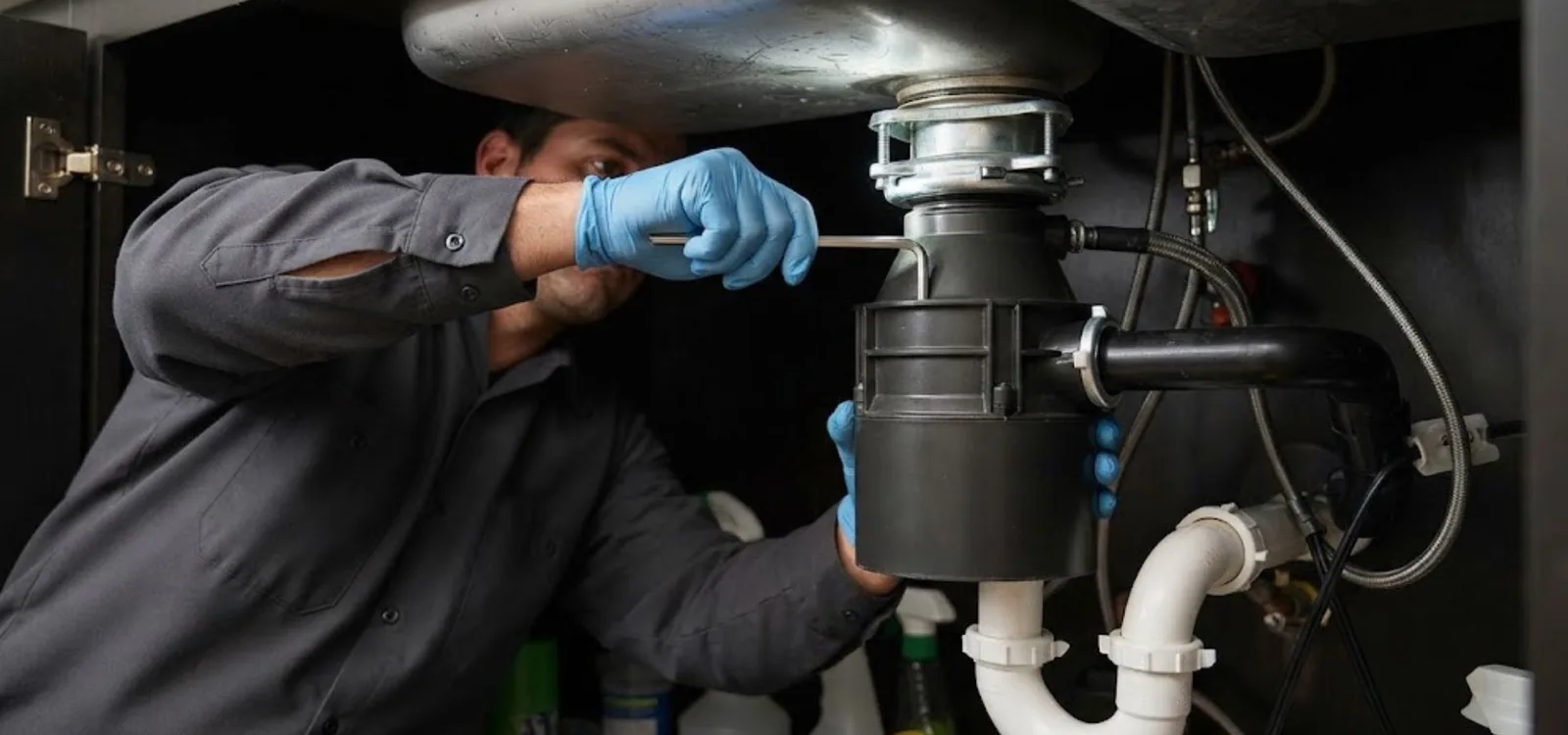
Kitchen sinks in a city of newer homes
North Ridgeville grew from 13,152 residents in 1970 to 35,280 in 2020, so many kitchens here are not old, but disposals still wear out. A unit installed when the house was built can be well past its useful life. When you decide between repair and replacement, the age of the disposal matters more than the age of the house.
Kitchen waste leaves your sink through a private line into the city sanitary sewer, which flows to the French Creek Wastewater Treatment Plant in Sheffield Village. Fats and fibrous scraps that make it past the disposal still land in that line. If the sink backs up even with the disposal working, the problem is in the pipe, and drain cleaning is the next stop.
What shapes the price of fixing or replacing a disposal
A disposal can need a minute with a hex key or an entire swap. These are the factors, and a clear price comes after the plumber has looked.
A jam is quick to free. A burned-out motor or a cracked housing is replacement, not repair.
Older units are often better replaced than repaired. Motor strength changes the price of a new one.
Some mounting rings reuse easily. A cracked flange or a mismatched mount adds parts and time.
A unit that plugs in is simple. A hardwired one needs the circuit handled safely, and a plumber tells you when an electrician is also needed.
Evening and weekend visits are priced differently from scheduled daytime work, and you are told which applies first.
Most homeowner policies cover sudden accidental water damage but not wear or a motor that quit with age. For a real number on your disposal, call and describe what it does when you flip the switch.
Common questions
Yes. The line is open 24/7. If the disposal is leaking or smoking, switch it off at the breaker and call.
Turn off the power, then use a hex key in the socket at the bottom of the unit to rock the blades free. If it still hums after clearing, call a plumber.
A leak from the sink flange can be resealed. A leak from the body or the bottom usually means the seals have failed, and the unit has to be replaced.
The drain hose or the disposal port is partly blocked. The water has nowhere to go, so it exits at the air gap. Clearing the hose and the port solves it.
Yes. It needs a sink flange, a drain connection, and power, and a plumber will tell you if an electrician should handle the wiring. Ask the Building Division at (440) 490-2081 about permits.
It is a small red button on the bottom of the unit that pops out when the motor overheats. Wait a few minutes, then press it. If it trips again right away, the unit needs service.
How a plumber diagnoses a disposal that will not work
- 1Cut the power. The plumber turns off the switch and the breaker before touching anything near the chamber.
- 2Listen and test. A hum with no spin means a jam. Silence means no power or a tripped reset. A grinding or rattling sound means a foreign object.
- 3Free a jam. A hex key turned at the bottom of the unit rocks the flywheel loose, and tongs or pliers pull out any item stuck in the chamber.
- 4Press the reset. The red button on the bottom pops out when the motor overheats. Waiting a few minutes and pressing it restores power if the motor is sound.
- 5Check the leak points. A flashlight and dry paper towel show whether the drip comes from the sink flange, the dishwasher inlet or a seal on the unit.
Signs the disposal is on its way out
- Humming without turning, even after the jam is freed. The motor or its start capacitor may be dying.
- Water drips from the bottom of the unit. A leak from the body means the seals have failed and the unit cannot be repaired.
- Foul smells that persist after cleaning. Food is trapped in a worn chamber or the drain behind it.
- Slow grinding that leaves coarse pieces. The blades are dull or the motor is weak.
- The reset button trips repeatedly. The motor is overheating under a normal load.
Disposal leaking under the sink?
Switch it off, empty the cabinet, and call. The plumber can tell you what to expect.
Repair, replace or install new: how to choose
| What you see | Likely outcome | Reason |
|---|---|---|
| Hums, does not turn | Free the jam with a hex key | A stuck flywheel is the common cause |
| No sound at all | Reset, check the switch and outlet | Overheated motor or lost power |
| Leak from the sink flange | Reseat the flange with new putty or gasket | The seal around the sink has failed |
| Leak from the unit body | Replace the unit | Internal seals cannot be repaired |
| No disposal installed | New install with mounting kit | Needs sink connection and power |
Putting a disposal where none exists means adding power and a drain connection. If you are remodeling, see plumbing installation. Next to the disposal, a leaking faucet can mimic a disposal leak, so check faucet repair if the drip is above the unit.
Permits, wiring and who may do the work
Installing a disposal changes the plumbing under your sink and often involves electrical wiring. North Ridgeville requires a permit for alterations involving the water supply or the sanitary sewer. Permit rules vary, so ask the Building Division at (440) 490-2081 whether a replacement of an existing disposal needs one.
The drain and air-gap connections follow the Ohio Plumbing Code, which is built on the International Plumbing Code (IPC).
Ohio does not require a state license for residential plumbing contractors, but North Ridgeville requires contractors to register with the city. Ask for proof of insurance and a written scope. Be cautious of anyone who avoids permits or asks for a large payment before work. If you want to verify a contractor, call the Building Division.
Dishwasher leaks and the disposal connection
A dishwasher drain hose usually connects to a port on the side of the disposal. On a new disposal, that port is sealed with a plug called a knockout. If the plug is not removed, the dishwasher cannot drain, and water stays in the bottom of the tub.
An air gap is the small fixture next to the faucet in some kitchens. It keeps dirty sink water from flowing back into the dishwasher. When the drain hose or the disposal port clogs, water spills out of the air gap onto the counter. The fix is clearing the hose and the port, not replacing the air gap.
Disposal leaking or smoking: what to do before the visit
- Switch off the disposal and the breaker if water is dripping or you smell something burning.
- Do not run water through the sink if the unit leaks. Water will pour into the cabinet.
- Put a bucket under the unit and empty the cabinet of cleaning supplies and stored items.
- Keep hands out of the chamber. Use tongs for anything stuck, only with the power off.
- Do not use chemical cleaners in a jammed unit. They corrode the seals and burn skin.
Call the line once you have made it safe. A plumber can tell from a short description whether it is a seal, a motor or a clogged line.