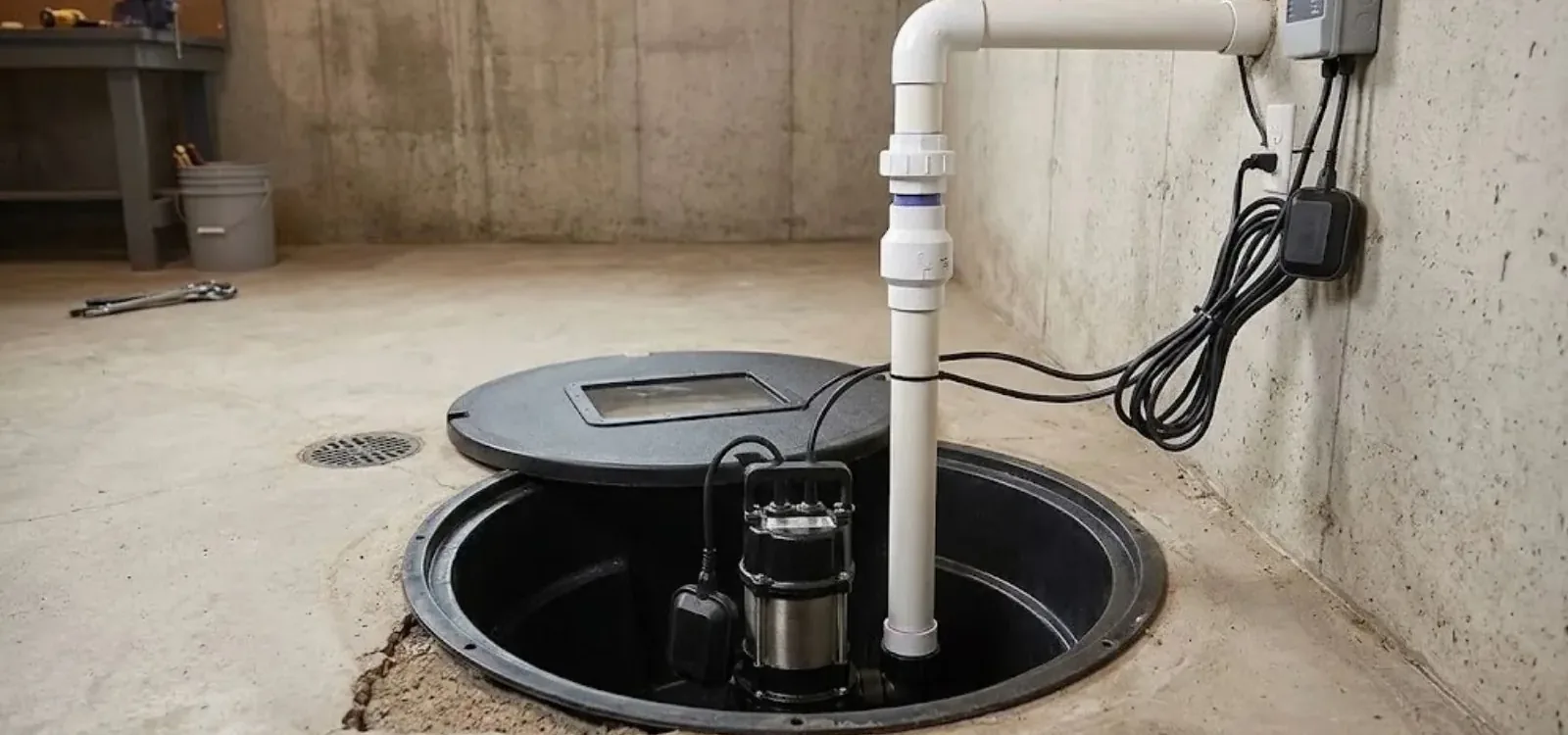
The pit is full or the pump will not start: first checks
Most failed pumps fail for a small reason. If the pit refills no matter what the pump does, the real issue may be water entering faster than any pump can move it.
- Look at the power first. A tripped GFCI outlet or an unplugged cord is the most common cause of a silent pump.
- Do not stand in water to reach an outlet or the panel. If water touches electrical equipment, leave it alone and call.
- Test the float by pouring a bucket of clean water into a sump pit. A working pump starts and empties it. Never do this with a sewage ejector pit.
- Listen. A hum with no pumping may mean a jammed impeller. Cycling every few seconds points to a stuck float or failed check valve.
What a plumber checks inside a failing pump
- 1Power and switch. Cord, outlet, breaker and float switch are tested first, since the float can snag on the pit wall.
- 2Intake and impeller. Silt and gravel clog the intake screen and wear the impeller until the pump moves little water.
- 3Check valve. This one-way valve keeps water from falling back into the pit. If it fails, the pump refills the pit it just emptied.
- 4Discharge line. The plumber follows the pipe outside to confirm it is open and not crushed, kinked or iced at the end.
Repair is practical for a clogged intake, stuck float or bad check valve. When the motor is burned out or the housing is cracked, replacement is the sensible fix.
Pit full and the pump silent?
Call and tell us what you see. The line is open every hour of every day.
What shapes the price of a sump pump repair or new install
A float switch or check valve is a small repair. A failed motor usually means a new pump.
Submersible, pedestal, battery backup and sewage ejector pumps differ in parts, power and installation effort.
A good pit takes a new pump. No pit means breaking the floor, setting a liner and patching the concrete.
A short run out of the house is simple. A long or awkward route adds pipe and fittings.
Storm-night calls are priced differently from a planned daytime install, and you are told which applies first.
Many homeowner policies exclude water that backs up through a drain or comes in because a pump failed, unless a specific add-on covers it. Read the water backup section of yours. For a real number, call the line and describe the pit.
Common questions
Yes. The line is open 24/7, and storms rarely wait for office hours. Call, say how much water is in the basement, and keep away from wet outlets until the plumber has looked.
Usual causes are a failed check valve, a clogged or frozen discharge line, or an impeller worn down by silt. The plumber tests each in turn, starting with the discharge end outdoors.
Pour a bucket of clean water slowly into the pit. The float should rise, the pump should start and the pit should empty. If not, unplug the pump and call. Do not do this with a sewage ejector.
Yes. It means breaking the floor at the lowest point, setting a pit, running discharge pipe outside and sealing the concrete. Whether a pump alone is enough depends on where the water comes from.
A sump pump moves groundwater out of a pit. An ejector lifts waste from basement fixtures up to the sewer line, in a sealed and vented pit. They are not interchangeable.
Storms that bring the most water often take the power out too. A backup pump runs on a battery when the main one cannot, and it needs testing like the main pump.
Basements, storm runoff and what your city bill separates
Basements are common across North Ridgeville, and northern Ohio gets heavy rain and a spring thaw, so groundwater tests pumps every year. Test yours before the wet season, because a pump that sits idle for months can seize. The water it moves is groundwater, which belongs outside and away from the foundation, not in the sanitary sewer the city sends to the French Creek plant.
The city bills sanitary sewer and stormwater separately, which reflects that split. For local discharge questions, call Public Utilities at (440) 490-2049 or the Building Division at (440) 490-2081. Sheffield Village sits near the Black River at about 623 feet against about 725 feet in North Ridgeville, and lower ground generally collects more runoff, so a backup pump deserves more thought there.
Ohio's plumbing code, built on the International Plumbing Code (IPC), is also why discharge rules matter, so confirm local requirements before moving the discharge line.
Signs your sump pump is on its way out
- It runs constantly or never seems to stop between storms. The pump is overworked or the check valve has failed.
- It never runs even when the pit is full. The float, switch or motor is the likely cause.
- Grinding, rattling or a loud hum during operation. The impeller is damaged or jammed.
- It switches on and off rapidly. A small pit, a bad float or a leaky check valve is to blame.
Pump types and where each fits
| Pump | Where it fits | Trade-off |
|---|---|---|
| Submersible sump | Most finished basements, quiet in the pit | Sealed, so harder to service |
| Pedestal sump | Narrow pits and open basements | Louder, with the motor above the water |
| Battery backup | Homes where storms cut the power | Needs a charged battery and testing |
| Sewage ejector | A basement bathroom below the sewer line | Sealed, vented pit, rarely a DIY job |
Sewage ejector pumps and basement bathrooms
A basement toilet or laundry sink sits below the main sewer line, so waste has to be lifted. An ejector pump sits in a sealed, vented basin, passes solids and pushes waste up into the drain line. When it fails, the basin fills, odors appear and nothing downstairs drains.
Installing or replacing an ejector means tying into the sanitary sewer, so a permit is likely. If you are adding a basement bathroom, plumbing installation covers the rough-in, and the ejector is one decision within it.
Permits and hiring for pump work
North Ridgeville requires a permit for alterations that involve the sanitary sewer, which can include a new ejector connection. For a like-for-like sump pump swap, permit rules vary, so ask the Building Division. Inspections must be scheduled at least 24 hours in advance.
Contractors working in the city must be registered. Ask for proof of insurance and a written scope, and be wary of anyone who wants most of the money before starting.