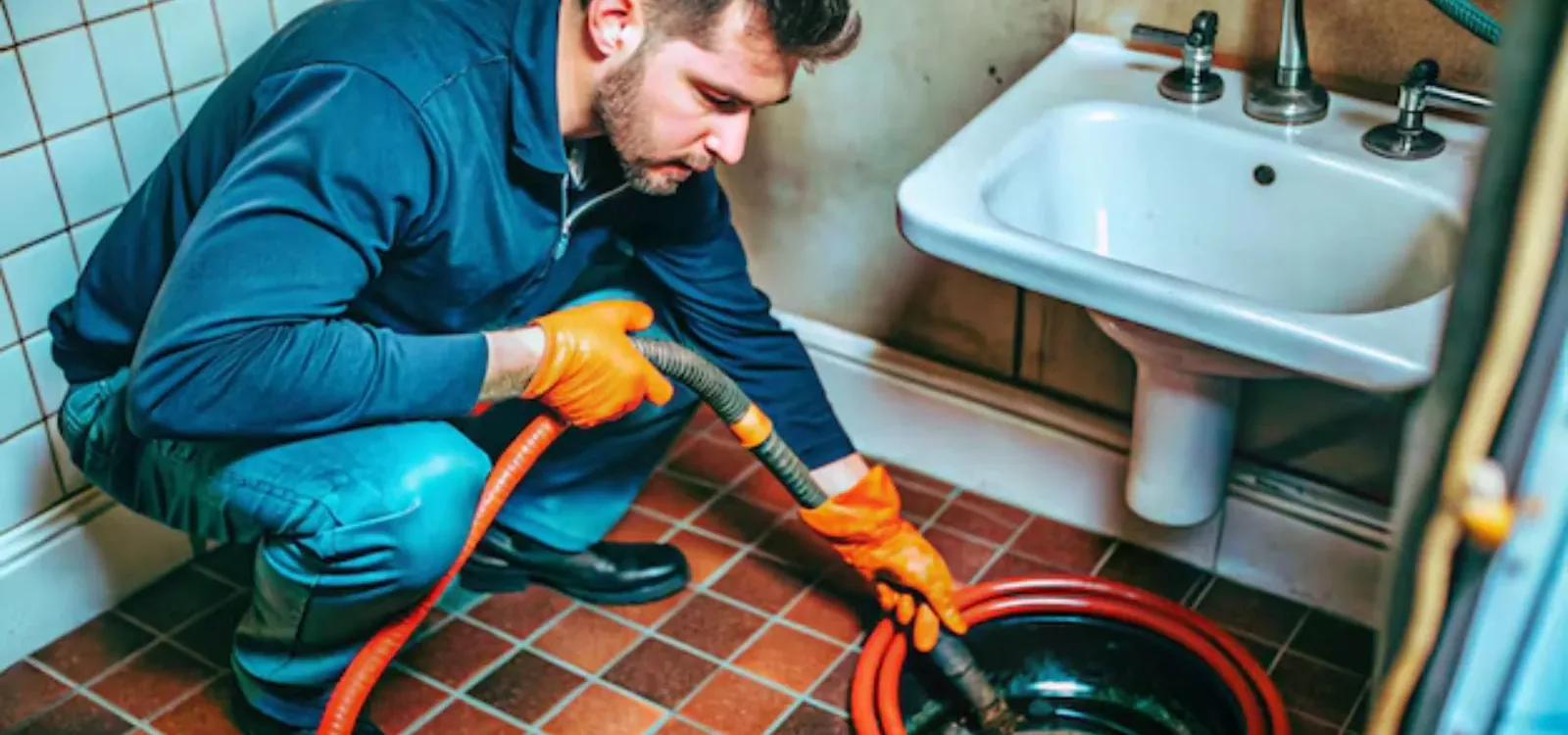
What the vent does and why a blockage causes trouble
Every drain in the house connects to a vent pipe that rises through the walls and ends in an opening on the roof. That pipe does two jobs: it lets fresh air in behind flowing water, and it lets sewer gas out above the roofline.
When water drops down a drain, it needs air to replace it, the way a bottle glugs when you pour it upside down. With the vent blocked, the water pulls air through the nearest trap instead. You hear gurgling, the trap loses its water seal and a sewer smell enters the room.
Seven signs the vent may be blocked
- Gurgling from sinks, tubs or floor drains right after water runs somewhere else in the house.
- Several fixtures draining slowly at the same time, with no single clog to blame.
- A toilet that bubbles or burps when the washer drains or a shower runs.
- Sewer smell indoors near drains whose traps keep losing their water.
- A toilet that flushes weakly but works well after you open a window or a nearby fixture.
- Water in a tub or shower that drains with a sucking sound.
- Symptoms that come and go with the weather, getting worse during a cold snap.
One of these alone can have another cause. Two or three together, across different fixtures, point toward the vent or the main drain.
Vent clog or drain clog? A side-by-side look
| What you notice | More likely a vent problem | More likely a drain clog |
|---|---|---|
| Gurgling | Many fixtures, mostly after other water runs | One fixture, same spot every time |
| Slow drain | Several fixtures, uneven | One fixture, steady slowdown |
| Standing water | Rarely a full backup on its own | Water rises and stays in the fixture |
| Smell | Dry traps and a sewer odor | Foul water smell from the clogged fixture |
| Effect of a cable | Little or no change | Flow returns right away |
If you have already tried a plunger and a cable on a drain with no change, the vent or a deeper line is the next suspect. A plumber can confirm with a camera look, and drain cleaning covers the tools used to clear the line itself.
What actually blocks a vent pipe
The opening on the roof is small and exposed, and it collects whatever the weather and the neighborhood send its way. Common blockers include leaves and debris that drop into the opening, a bird or wasp nest, a dead animal, and ice or snow.
In a northern Ohio winter, frost can build up around the pipe opening as warm moist air from the house meets freezing air at the top. The ring of ice narrows the opening a little more each cold night until air barely moves. This is why vent problems often show up in the coldest weeks and ease when it warms.
Inside the walls, a vent can also be damaged or disconnected, usually after remodeling. A cut or crushed section, a stray piece of insulation or a poorly made joint can block air just as well as a nest.
Gurgling drains and a sewer smell?
Say which fixtures act up and when. A plumber can sort a vent problem from a drain clog over the phone.
Inspections and permits when the vent needs real work
A simple clearing job at the roof opening does not usually need a permit. Altering vent piping, adding fixtures or rerouting drains does, because North Ridgeville requires a permit for plumbing alterations. Permit rules vary, so ask the Building Division at (440) 490-2081 if you are unsure which side your job falls on.
Inspections must be scheduled with the Building Division at least 24 hours in advance, so do not leave open walls waiting for a same-day visit. If a vent problem followed a remodel, ask whether the work was permitted and inspected. Homes in Sheffield Village and Avon sit under different local offices, so check with the right one.
Safe checks you can do before calling anyone
- 1Run water at each fixture one at a time, then two together, and note which ones gurgle.
- 2Look at the roof from the ground with binoculars. Find the pipes sticking out and check for a visible nest, debris or ice around the opening.
- 3Check the main cleanout in the basement or crawlspace for water standing in it. Water there points to the main drain instead.
- 4Pour a bucket of water into a trap that smells and see if the odor returns within a day.
Do not climb onto a roof to clear a vent, especially in winter. A fall is a far bigger risk than a blocked pipe, and a plumber has the harness, ladder and tools for it.
How a plumber confirms it and what the fix looks like
A plumber starts by ruling out the drain. A cable at the cleanout, or a camera run through the main line, shows whether the pipe is clear. If water moves freely below but the symptoms continue, attention shifts to the vent.
At the roof, the plumber clears the opening and may run a cable or a hose down the vent to check for a blockage deeper in. Inside the house, a smoke test or a pressure test can reveal a crushed or disconnected section.
When a vent has been cut, crushed or poorly joined, the repair means opening walls and reconnecting or replacing a section. A house that never had enough vents, or one altered during a remodel, may need new vent runs added, which falls under plumbing installation work.
Why bathroom and kitchen remodels cause vent trouble
Moving a sink, adding a bathroom or finishing a basement changes the drain layout. If the new fixtures are not vented properly, the same gurgling and slow draining appear in the new space, and sometimes in the old one too.
A basement bathroom added to an older house is a typical case. The fixtures sit far from the existing vent stack, and the lines need their own air path. Skipping that step leads to the symptoms described above within weeks.
Questions we hear
It can make a toilet flush weakly and gurgle, but a full backup usually involves a drain clog. A blocked vent slows the flow instead of stopping it, so see how the main drain behaves too.
A dry trap smell is local, at a floor drain or an unused sink, and goes away when you pour water in. A smell that returns while traps are full suggests a vent, cracked pipe or seal problem.
Yes. Frost can narrow the opening where warm moist air meets freezing air. This is why a house can run fine most of the year and gurgle during hard freezes.
A hose from the roof can wash out leaves, but climbing up there is risky in any season. Leave it to a plumber, especially when ice or wet shingles are involved.
Rarely by itself. If sewer gas is strong, drains are backing up into the house or the house smells like rotten eggs, leave the area and call the line right away.