A pipe is frozen right now: what to do in order
- 1Open the faucet on the frozen line, hot and cold if both are affected. Water needs somewhere to go as the ice melts.
- 2Find the frozen spot. Look for frost on the pipe, a section that feels colder, or a bulge. Common spots are along exterior walls and near basement windows.
- 3Locate the main shutoff before you start so you can close it quickly if the pipe leaks.
- 4Apply gentle heat. Use a hair dryer on low, an electric heating pad wrapped around the pipe, or towels soaked in warm water. Start nearest the faucet and work back toward the frozen part.
- 5Keep going until full flow returns. Then check along the pipe for drips or wet spots.
If you cannot find the frozen section or it is behind a wall, stop and call. Cutting into drywall blindly can turn a minor freeze into a bigger repair.
What not to do with a frozen pipe
A few instincts do more harm than good. Avoid these:
- Open flame: a torch or lighter can ignite framing or insulation and overheat the pipe.
- Boiling water poured on a pipe, which can crack a cold pipe or fitting through sudden temperature change.
- Space heaters left unattended on or near wet areas or flammable materials.
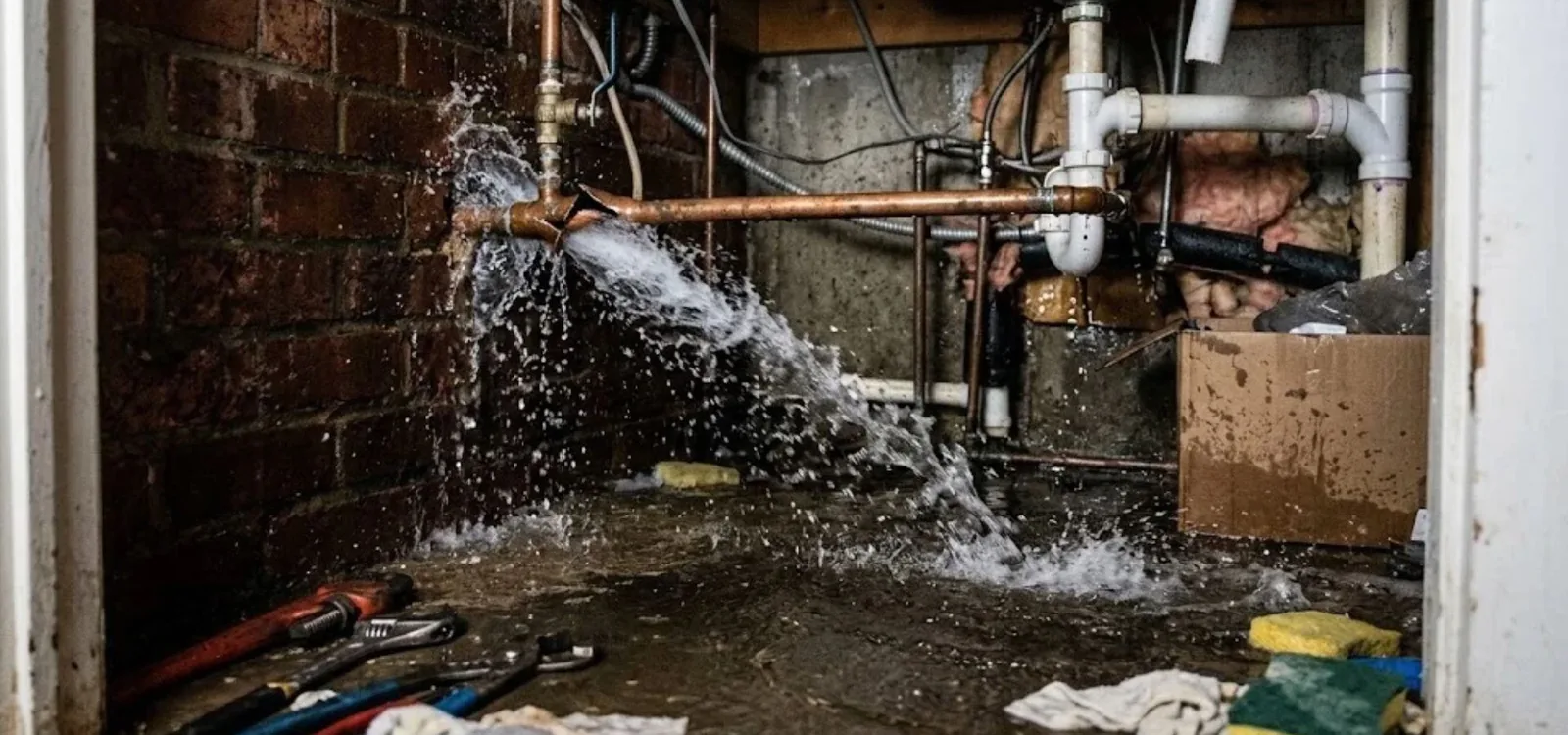
- Walking away while the faucet is open. Once the ice melts, a cracked section can spray.
- Ignoring a silent line. A frozen pipe that is not heated stays a risk until it thaws and may split first.
Heat applied slowly lets the ice melt from the faucet outward, which relieves pressure as it goes. Fast heat on a pipe that is already stressed can finish the job the ice started.
Where pipes freeze in northern Ohio houses
Northern Ohio has hard freezes, snow and thaw cycles, and the pipes that fail are rarely in the warm center of the house. They sit where cold air reaches them.
| Location | Why it freezes | What helps |
|---|---|---|
| Exterior-wall kitchen or bath lines | Little insulation between pipe and cold wall | Open cabinet doors on cold nights |
| Basement rim joist area | Cold air leaks around the sill | Seal gaps, wrap exposed pipe |
| Garage and unheated rooms | No heat source | Insulate, keep heat on |
| Outdoor hose spigots | Water left in the line | Disconnect hoses, shut interior valve |
| Crawlspaces | Cold air under the floor | Close vents and insulate pipes |
Basements are common in the area, which gives you an advantage. A finished basement with heat vents helps, while an unheated corner near an exterior wall is where trouble begins.
Pipe frozen or leaking after a thaw?
Call the line, tell us what you see, and a plumber will talk you through the next safe step.
Shutoffs, permits and who to call in North Ridgeville
If you cannot find or turn your shutoff, call the City of North Ridgeville Public Utilities Division at (440) 490-2049, Monday to Friday, 8:00 a.m. to 4:30 p.m. They can answer questions about locating the meter and the water service shutoff. Do that before the first freeze, since a stuck valve is hard to deal with during an emergency.
After a burst, repairs that change the water supply need a permit under the city's rules, so ask the Building Division at (440) 490-2081 whether yours does. Permit rules vary by job, and the city also requires contractors working in it to register. Your plumber should know both.
Homes near North Olmsted and Sheffield Village have their own local offices and rules for these questions. The same hard freezes hit the whole region, but each town's permit process is its own.
Did it burst? Signs to look for after a thaw
Ice can crack a pipe without any sign until the thaw. Water then appears where the crack opened. After any freeze, check for these:
- A new wet spot on a ceiling, wall or floor that was dry before.
- A drop in pressure or a faucet that runs weak after thawing.
- Running water sounds when everything is off.
- A moving water meter with the house main open and all fixtures off.
- Warm or damp spots on a wall where the pipe runs.
If water is flowing, close the main and call the 24/7 line. Our burst pipe repair work covers cracked copper and other supply lines. If you suspect a slow leak and cannot see where, leak detection finds it before the damage spreads.
Close the main first, then open a low faucet and a high one to drain the system. Turn off power to any wet area before touching anything in it.
Stopping the next freeze before it starts
Most prevention is small and takes an afternoon. Do these before the first hard freeze:
- Disconnect garden hoses and shut off the interior valve to outdoor spigots, if one exists.
- Insulate exposed pipes in basements, garages and crawlspaces with foam sleeves.
- Seal air leaks around where pipes enter the house.
- Keep the heat on in vacant rooms and during travel, set to a steady comfortable level.
- Open cabinet doors under sinks on exterior walls during a hard freeze.
- Let a faucet drip on the coldest nights. Moving water is slower to freeze.
Know where your main shutoff is before you need it. Test it once, so you know it turns.
Questions we hear
A frozen pipe usually affects both hot and cold or the whole line, and it happens in cold weather. A clog affects drains, not supply. Frost or a cold section on a pipe confirms a freeze.
Yes, on a low setting, kept moving, and away from standing water. Open the faucet first so the melting ice can flow out.
No. Many freeze and thaw with no damage. But ice can crack a pipe or fitting, and the damage often appears as the water starts moving again.
Close the main shutoff, turn off power to the wet area, open a low faucet to drain the system, and call the 24/7 line. Do not cut into the wall yourself.
Often it covers sudden accidental damage, but policies differ on wear, neglect and vacancy. Photograph the damage, call your insurer, and ask before repairs begin.
On the coldest nights, a slow drip on exposed lines helps, since moving water is harder to freeze and relieves pressure. It is a precaution, not a substitute for insulation.