What decides the schedule
| Factor | Faster when | Slower when |
|---|---|---|
| Size of the house | One bath, small footprint | Several baths and a kitchen on different floors |
| Access to pipe | Open basement ceiling or crawlspace | Finished ceilings and walls everywhere |
| Pipe material in place | Easy to cut out | Mixed or corroded runs that fight removal |
| Number of fixtures | Few connection points | Many sinks, a laundry and outdoor spigots |
| Drywall repair | Small access holes | Many openings to patch and paint |
Two houses with the same square footage can run very different schedules. The one with an unfinished basement and straight pipe runs will go faster than one where every run is buried behind plaster.
A repipe, phase by phase
- 1Walkthrough and plan. The plumber looks at every fixture, traces the supply runs, and decides where the new lines will go and where access holes are needed.
- 2Permit and registration. Paperwork is filed before work starts, and the permit covers the supply changes.
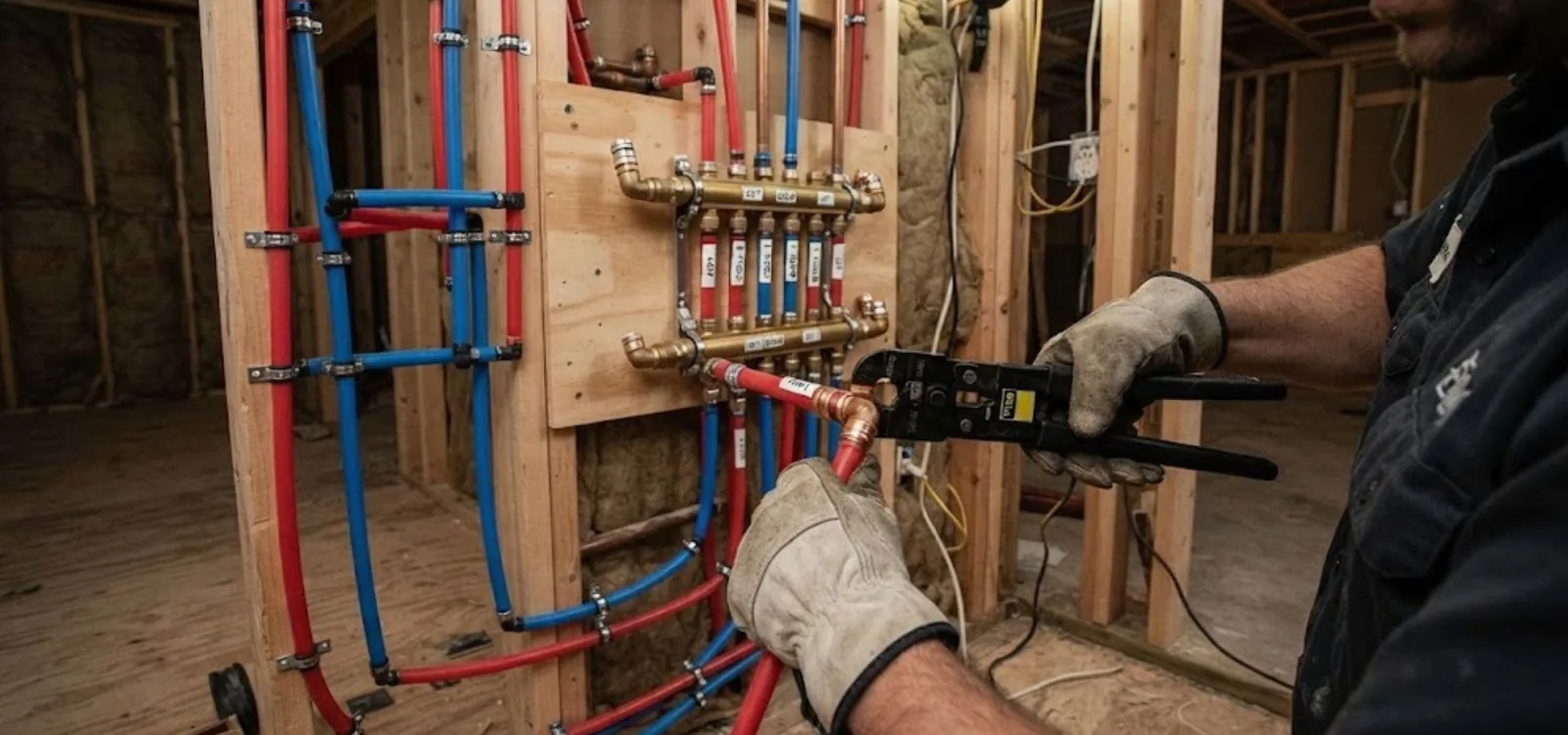
- 3Shutoff and layout. The water is turned off, the main is prepared, and the new run is laid out with a manifold or branch lines.
- 4Rough-in. New pipe is routed to each fixture through the open or newly cut spaces, then connected and pressure tested.
- 5Inspection. The building inspector checks the rough plumbing before walls are closed.
- 6Reconnect and restore. Fixtures are reconnected, water is turned on, and everything is tested for leaks.
The inspection is the part homeowners forget to plan for. Everything waits until the inspector signs off, so a schedule needs a cushion for it.
City steps before a repipe starts in North Ridgeville
North Ridgeville requires a permit for alterations that involve the water supply, and a repipe is one. Plumbing subcontractors must be registered and approved by the Building Division for the current year, and rough plumbing is inspected, with inspections scheduled at least 24 hours in advance by calling (440) 490-2081.
Ohio does not require a state license for residential plumbing contractors, because the Ohio Construction Industry Licensing Board covers commercial work. That makes the city registration and permit the real checkpoints for a house. Ask the plumber to show the registration and who will pull the permit before you agree to a start date.
Those steps are why a repipe in Elyria or North Olmsted may run on a different timeline, since each city has its own permit and inspection office.
Living in the house during the work
Most households stay home through a repipe. Water is typically shut off while the plumber works and turned back on at the end of each day, so the house has running water in the evening. Plan to fill a few jugs for drinking and cooking, and use the toilet early or late.
Dust and noise are real. The plumber cuts openings in drywall, so move furniture and cover floors. Pets and small children should be somewhere else when saws are running, and any access hole in a bathroom wall will be patched after the plumbing passes inspection, not before.
Planning a repipe?
Call the line and describe the house and what is failing. The plumber can talk through the sequence and book a visit to look.
Is a repipe the right fix or is a repair enough
A leak does not always mean the whole house needs new pipe. One pinhole in copper can be cut out and fixed. Several leaks in different places, discolored water, and low pressure that returns after each repair are signs the pipe is failing along its whole length.
That is the case for repiping. For a single failing run, such as the service pipe from the meter to the house, water line repair may be all you need, and it takes a fraction of the time of a full replacement.
Copper, PEX or something else: does the material change the timeline
Material affects the work more than the calendar. Flexible plastic tubing can be pulled through walls with fewer cuts, which tends to mean smaller openings and less patching. Rigid copper needs soldered joints at every turn and more open space to work in.
Neither is automatically better for every house. The right choice depends on what is already in the walls, how the runs are laid out, and what the plumber can reach without opening finished rooms. Ask the plumber to explain why one material fits your layout and what it does to the number of access holes.
Also ask about the water heater connections and the main shutoff. Replacing the first few feet of pipe at each end is simple to include while the system is already apart, and awkward to come back for.
Questions to ask before you agree to a start date
- What is the order of work? Ask which rooms are done first, so you know when each bathroom is usable.
- When will the water be off each day? The plumber can usually plan for the morning work and restore it by evening.
- Who is on site? Ask how many people will be in the house and whether you need to be home.
- What counts as a change order? Hidden damage or a layout change can add work, and you should hear the price before it proceeds.
- How is the inspection handled? Ask who calls it in and what happens if the inspector needs a correction.
A plumber who answers these without hesitation has done this before. One who dodges them is telling you something too.
How to keep the job on schedule
- Clear access to the basement, utility closet and under every sink before the crew arrives.
- Decide on fixtures early. If you are replacing faucets or the water heater, pick them before the walls are closed.
- Ask about drywall and who handles the patching, because a repipe schedule often ends with a different trade.
- Keep the inspection window open. The inspector must be scheduled in advance, so ask when the call will be made.
- Ask what happens if the crew finds surprises, such as hidden damage. The plan and price may change, and you should hear about it before work continues.
Questions we hear
Usually yes. The plumber shuts the water off while cutting and connecting pipe and turns it back on when the day's section is finished. Ask your plumber to confirm the plan for your house.
Often with small access holes instead of large openings. Pipes can be fished through walls and ceilings in many houses, but some layouts need more drywall removed.
It depends on the contract. Many plumbing contractors close the holes roughly and leave finishing to a drywall or paint trade. Ask who is responsible before you sign.
In North Ridgeville, rough plumbing is inspected, and inspections must be scheduled at least 24 hours in advance with the Building Division. Walls stay open until it passes.
Repeated leaks, rust-colored water, falling pressure and visible corrosion at joints are the common signs. A plumber can inspect exposed pipe and test pressure to see how widespread it is.
Often yes. Walls are already open, access is easier, and the supply lines are checked or replaced before new finishes go on.