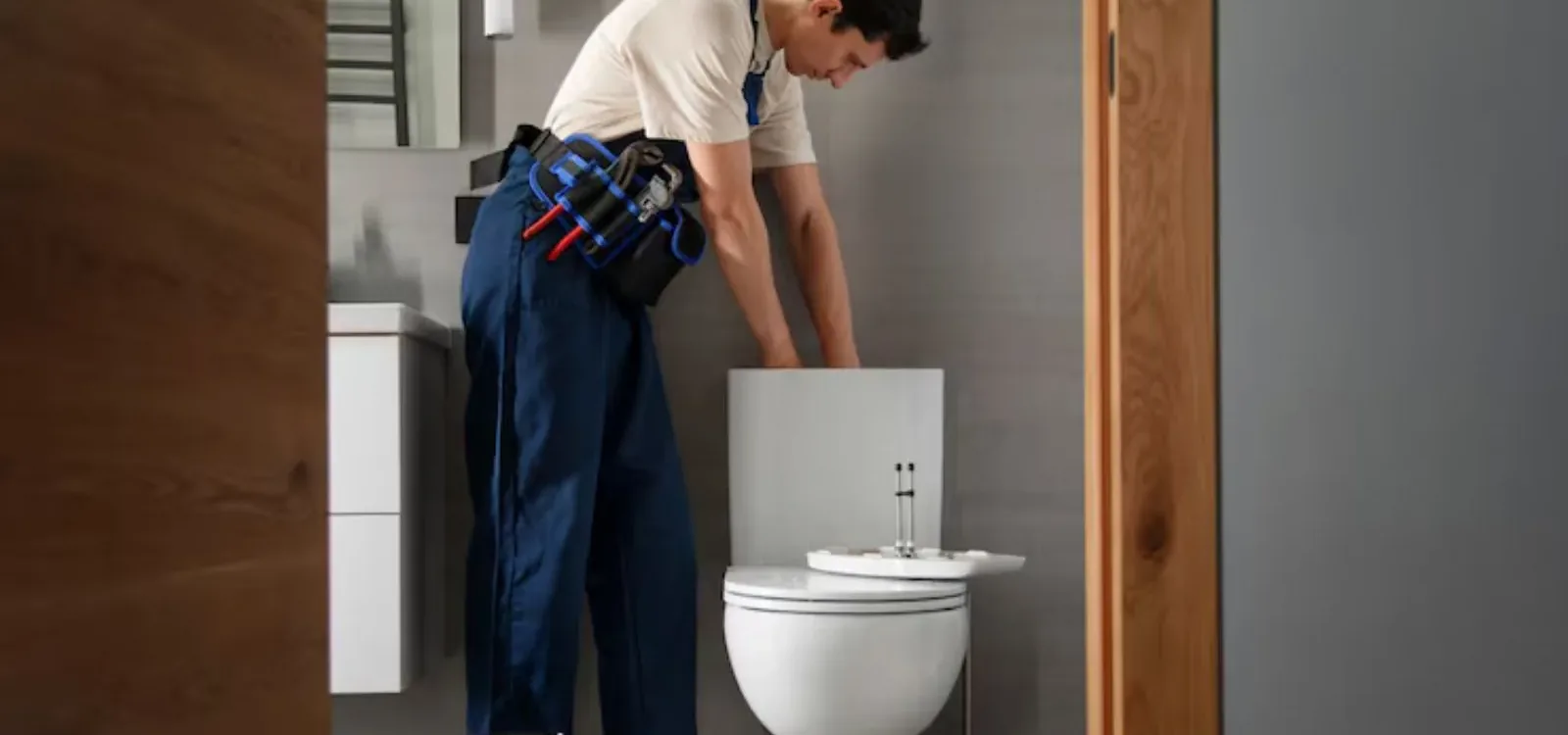
Check these four things before you buy a toilet
A new toilet that does not fit the room is a heavy return trip. Spend ten minutes measuring and looking at the floor first.
- Rough-in distance: measure from the finished wall behind the toilet to the center of the floor drain bolts. The new bowl must match that distance.
- Flange condition: the ring on the floor must be solid, level with or slightly above the finished floor and free of cracks.
- Bowl shape and space: a round bowl and an elongated bowl need different clearance in front. Check the door swing and the vanity.
- Supply valve: the shutoff on the wall should turn and hold. If it is stuck or leaks, plan to replace it too.
If the floor around the old toilet is soft, stained or spongy, stop. That means water has been leaking for some time, and the subfloor needs repair before anything new goes down.
Tools and parts that make the job go smoothly
| Item | What it does | Common mistake |
|---|---|---|
| Wax ring or wax-free seal | Seals the bowl outlet to the flange | Reusing the old ring |
| Closet bolts and nuts | Anchor the bowl to the flange | Over-tightening and cracking the base |
| Braided supply line | Connects the wall valve to the tank | Using one that is too long and kinked |
| Adjustable wrench and putty knife | Remove old bolts and scrape old wax | Leaving wax on the flange |
| Level and shims | Keep the bowl from rocking | Skipping the level check |
| Rags, bucket and sponge | Handle the water left in the old bowl | Not draining the tank first |
A flange repair ring is worth keeping on hand if the old flange looks chipped. Rags in the drain opening also stop sewer gas from drifting up while the bowl is off.
Removing the old toilet
- 1Shut off the water at the wall valve and flush to empty the tank. Sponge out what is left.
- 2Disconnect the supply line from the bottom of the tank with a wrench, with a rag ready for dripping water.
- 3Remove the nuts on the closet bolts at the base, usually under small plastic caps.
- 4Rock the bowl gently to break the old wax seal, then lift straight up with a helper. Keep it level so leftover water does not spill.
- 5Scrape the flange clean and stuff a rag into the drain opening. Inspect the flange for cracks and rot.
A toilet is heavier than it looks, and a porcelain edge can cut. Lift with your legs and put the old bowl on cardboard, not on the finished floor.
Toilet leaking at the base or not seating?
Tell the plumber what you see around the bowl and whether the floor feels soft. The line answers any hour.
Setting the new bowl so it does not leak or rock
The wax ring is the seal between the bowl and the drain, so everything depends on setting it once and correctly. Place the ring on the flange, or on the bowl outlet if the instructions say so, and do not reuse an old ring.
Lower the bowl straight down over the closet bolts without twisting, then press with steady weight. Twisting smears the wax and can open a path for sewer gas. If the bowl needs to be lifted again, replace the ring.
Tighten the nuts a little at a time, alternating sides, until the bowl is firm. Porcelain cracks under uneven force, so stop as soon as the bowl stops moving. Check with a level and add shims under the base edge if the floor slopes, then trim the bolt ends.
Mount the tank on the bowl if it comes separately, with its gasket and bolts snug but not crushed. Reconnect the supply line, open the valve slowly, let the tank fill and flush several times while you watch the base and the connections.
Permits and registered contractors in North Ridgeville
In North Ridgeville a permit is required for alterations that involve changes to the water supply or the sanitary sewer system. A straight swap of one bowl for another usually leaves both alone, but permit rules vary, so ask the Building Division at (440) 490-2081 whether your job needs one before you start. The Ohio Plumbing Code, which is built on the International Plumbing Code (IPC), sets the clearances around a toilet, which is one reason a plumber checks the layout first.
If you hire someone instead, the city requires contractors to be registered with it. Ask to see that registration, ask for proof of insurance and get the scope in writing. Neighbors in Elyria and Avon deal with their own city offices, so a rule you read about for one town may not apply to another.
When the flange or the pipe under it is the real problem
Most toilets that rock or leak after a swap point to the flange. A broken ring, a flange sitting below the floor or a rusted cast iron flange cannot hold a seal, however good the wax ring is.
Repair rings and extender spacers fix some cases. A flange attached to rotted wood or a cracked drain pipe needs more than a ring. That is plumbing installation work, and it involves opening the floor.
Call a plumber if you see any of these: a slow drain that predates the swap, water around the base after flushing, a rocking bowl that shims cannot fix or a running tank that will not stop. A toilet that refuses to flush properly or keeps running is often a repair rather than a replacement, which is where toilet repair comes in.
After the install: a quick test routine
- Flush five or six times and watch the base and both supply connections for drips.
- Put dry tissue around the base and check it after an hour for dampness.
- Listen to the tank after it fills. Hissing means the fill valve is not shutting off.
- Press on the bowl from the side. Any movement means the nuts need a gentle turn or shims.
Questions we hear
Yes. Wax compresses and takes the shape of the old fit, so a used ring rarely seals a bowl properly. A new ring is a small part that protects the floor from a slow leak.
The floor is uneven, the flange sits too low or too high, or the nuts are unevenly tight. Check with a level, add shims and tighten alternately. A persistent rock usually means a flange problem.
It is the measurement from the finished wall behind the toilet to the center of the drain flange. Match the new bowl to that number or it will not sit properly against the wall.
Yes if the drain is below the floor, but some basement bathrooms use a pump system because the sewer line is higher than the fixture. In that case the install differs from a standard bowl.
Look for cracks, rust, a ring that is loose on the floor or one that sits below the finished surface. Wobbly bolts and a bowl that never feels firm are common signs.