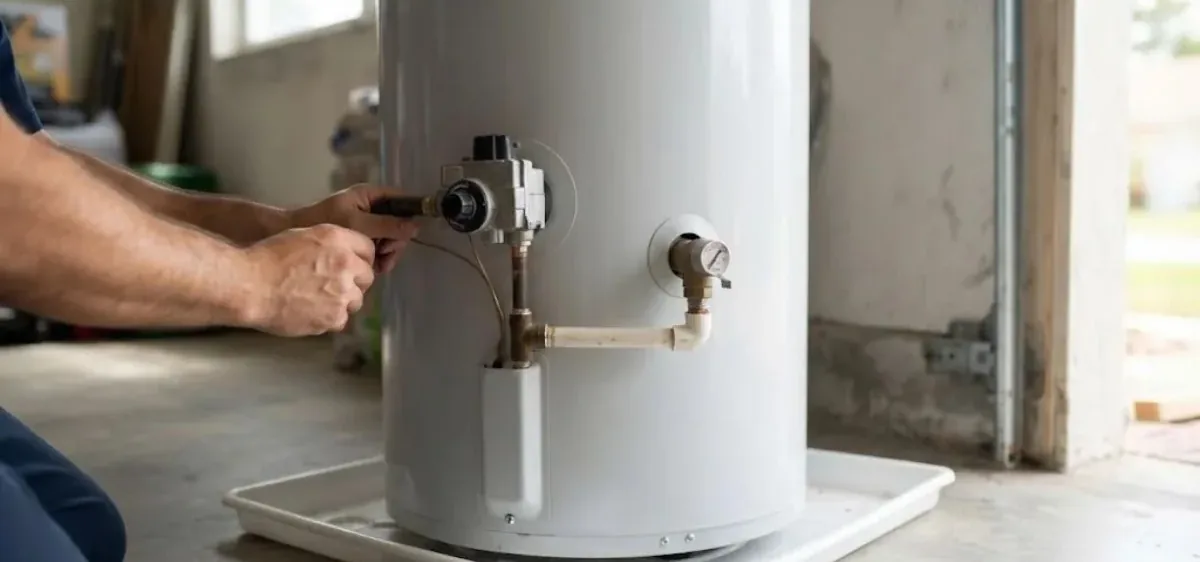
Before the plumber arrives: what to clear and decide
A little preparation shortens the visit and prevents last-minute decisions. Do these the day before if you can:
- Clear a path from the door to the heater. Move boxes, shelves and anything stored around it so there is room to work.
- Know your fuel: gas or electric. The plumber needs it for the order, and the city's permit application asks for it too.
- Decide on capacity with the plumber in advance. Size depends on household hot water use, not just the old tank's label.
- Locate the main water shutoff and the fuel shutoff. If either is stuck or leaks, tell the plumber when scheduling.
- Plan for no hot water for part of the day. Run laundry and dishes before the work starts.
Walking through the day, one stage at a time
Every job has the same backbone, whatever the brand or size. The plumber adapts the middle steps to your basement or closet.
- 1Shut off water and fuel. The cold supply valve is closed, and the gas valve or the electric breaker is turned off so nothing can ignite or energize while the unit is open.
- 2Drain the old tank. A hose runs from the drain valve to a floor drain or outdoors. Sediment often comes out with the water and can clog the valve.
- 3Disconnect and remove. Water lines, gas or electric connections, the vent, and the relief valve piping are taken off. The old tank, often heavy and awkward, leaves through the door or stairs.
- 4Set the new unit. It goes on a level base with a drain pan where appropriate, positioned so valves and controls stay reachable.
- 5Reconnect water. New flexible connectors or pipe unions go on, the relief valve and its discharge line are fitted, and an expansion tank is added where the system calls for one.
- 6Connect fuel and vent. Gas units get a gas connection leak-tested at every joint and a vent run that carries exhaust outside. Electric units get wiring checked and secured.
- 7Fill, purge and test. The tank fills with a hot tap open so air escapes. Only then is power or fuel restored, and the plumber watches the first heat cycle.
- 8Walk through with you. You are shown the shutoffs, the temperature setting and the relief valve, and told what to watch over the first days.
The North Ridgeville permit and inspection steps around the install
North Ridgeville's residential permit application has plumbing categories for New, Alteration, Replacement and Service Line work, and it asks for the water heater's fuel type and capacity. That is why the plumber needs both details before installation day, not on it. Whether a like-for-like swap needs a permit varies, so ask the Building Division at (440) 490-2081. The Ohio Plumbing Code, built on the International Plumbing Code (IPC), is the reference for venting and the relief valve.
If a permit applies, inspections must be scheduled at least 24 hours in advance, which means the inspector's visit cannot be arranged on the spot. Plan for that gap so the unit is not waiting on paperwork. The city also requires contractors to register with it, and plumbing subcontractors must be registered and approved by the Building Division for the current year.
Ohio does not require a state license for residential plumbing contractors, so the city registration and your own checks matter. Ask for proof of insurance, read the written contract and be cautious of anyone who avoids permits. Neighbors in North Olmsted and Avon deal with their own cities' offices, not North Ridgeville's.
Planning a water heater swap?
Call, tell us gas or electric, and we will walk through what the day will look like in your home.
Gas versus electric: where installation day actually differs
| Part of the job | Gas water heater | Electric water heater |
|---|---|---|
| Fuel connection | Gas line with shutoff and leak test | Dedicated circuit and breaker check |
| Venting | Flue or vent pipe to the outside | None needed |
| Combustion air | Needs enough air in the space | Not a concern |
| Typical delay | Vent corrections or gas line changes | Circuit or wiring upgrades |
| Final check | Gas leak test and flame observation | Element heat-up and thermostat check |
Swapping fuel types, such as gas to electric, adds work that a like-for-like replacement does not. Ask about it early. If you are planning a fresh setup rather than a swap, our water heater installation page covers what a new setup involves.
When the old tank is already leaking
A tank that leaks cannot be repaired, and a replacement is the fix. If water is spreading from the base, shut off the cold supply to the heater, turn off power or gas to it, and keep people away from wet electrical areas.
That kind of failure moves the job from planned to urgent. Emergency water heater replacement covers same-day appointments when available, which matters when the basement floor is wet and the household is without hot water.
What can slow the day down
Most installs run to plan. A few surprises account for nearly all the delays, and none are the plumber's fault.
- Corroded shutoff valves that will not close. The plumber has to shut off at the main and replace the valve.
- Old vent pipe that no longer fits the new unit or has rusted through.
- Gas line that is too small for the new burner and needs changing before anything is connected.
- A heater in a tight closet where the new tank barely fits and extra fittings are needed.
- Missing floor drain so the drain pan or relief discharge has nowhere to go.
A good plumber raises these as soon as they appear and explains the options, which may be a short added step or a change to the plan. You should hear the new scope and the price before the extra work begins, not after.
Tell the plumber what you know when you call, including photos of the existing setup if you have them. It reduces the number of surprises.
Questions we hear
For part of it, yes. The old tank is drained and removed, the new one is filled and heated, and the plumber has to watch the first heat cycle. Heating time depends on the tank size, so ask what to expect when you schedule.
Someone should be, at least at the start and the end. The plumber needs access to the heater, and you need to hear the shutoff and temperature walkthrough.
Permit rules vary by job. The city's application has a Replacement category for plumbing, so ask the Building Division at (440) 490-2081 about your specific swap before work begins.
Heated water expands. In a closed system, that extra volume has nowhere to go and raises pressure. An expansion tank gives it somewhere to go, protecting fixtures and the relief valve.
Possibly, but it is a bigger job than a swap. It can need an electrical circuit, a vent change and a gas line cap, so raise it when you call rather than the morning of.
Look at the connections for drips, test hot water at a couple of taps, and check the relief valve discharge line is clear. Call right away if you see water, smell gas or hear unusual noises.