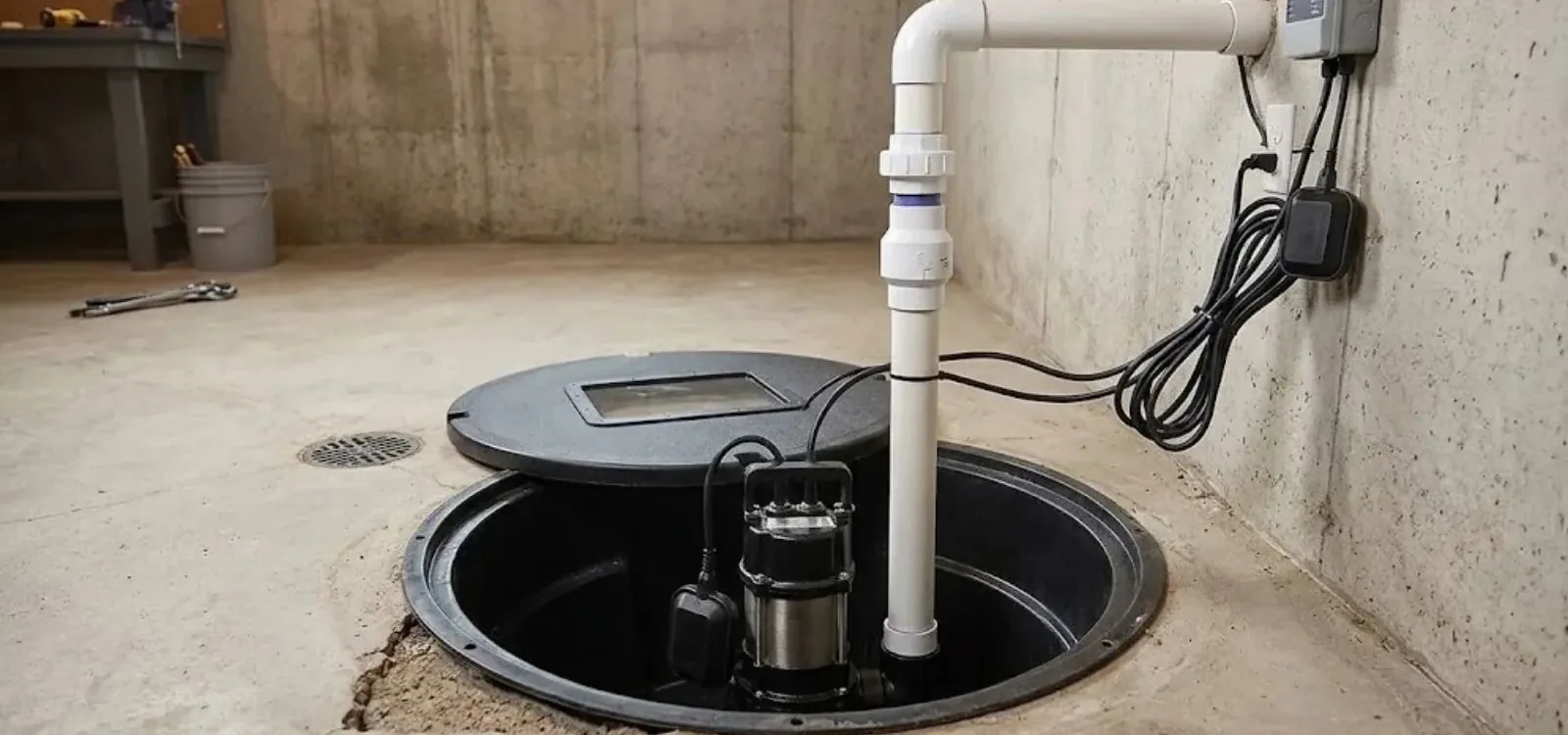
Five factors that move the price
Replacing a pump in an existing pit is mostly the pump and a short pipe job. Cutting the concrete, digging a pit and setting a new basin adds labor, disposal of concrete and soil, and slab repair.
Submersible pumps sit in the pit and run quieter. Pedestal pumps sit on top of a column and are easier to reach. Stronger pumps cost more, and the pump should match the amount of water the pit takes in.
Storms knock out electricity at the moment you need the pump most. A battery backup or a water-powered unit adds equipment and work, but protects the basement when the power drops.
Water has to leave the house and go somewhere that makes sense. A short line through the rim joist is simple. A long run, an extra elbow or a buried line takes more time.
A cluttered, finished or tight basement slows the work. Old pipes, a failing check valve or poor electrical outlet placement can add steps.
Prices also change with timing. A planned daytime appointment is priced differently from a storm-night emergency, and a plumber tells you which applies before the work starts.
What a clear sump pump quote should list
Two quotes with the same bottom line can cover very different work. Before you compare, check that each one names the same items.
- Pump type and capacity: submersible or pedestal, and what it is rated to move.
- Basin or pit work: new, reused or reset, with the lid sealed or not.
- Check valve: the one-way valve that stops pumped water falling back into the pit.
- Discharge line: material, route, where it ends and how it is protected from freezing.
- Electrical: whether an outlet on its own circuit is included or assumed.
- Backup system: included, optional or left out.
- Cleanup and disposal: concrete, soil and the old pump.
If an item is missing, ask whether it is not needed or just not mentioned. A short price built on missing items grows after the work begins.
New pump, replacement or repair: three paths
| Situation | Likely path | What changes the price |
|---|---|---|
| Pump runs but the basement still floods | Check the pit, check valve and discharge before replacing | Cause found on site |
| Old pump has failed | Replace the pump in the existing pit | Pump size, check valve, backup add-on |
| No pit and water is coming in | Dig and set a new pit and pump | Slab cutting, concrete repair, discharge route |
| Pump works but loses power in storms | Add a battery or second pump | Equipment and electrical work |
A failing pump is often a repair rather than a replacement, and sump pump repair covers what a plumber checks before recommending a new unit. Common culprits include a stuck float switch, a clogged intake and a failed check valve.
Basement taking on water?
Describe the pit, the pump and what happens during a storm. The line is open every hour of every day.
Utility bills, discharge questions and the city side of the job
The North Ridgeville Public Utilities Division bills water, sanitary sewer, stormwater and refuse collection to more than 15,000 accounts, and it treats sanitary and stormwater as separate services. That split is the reason where your sump water goes is worth asking about. Call the division at (440) 490-2049 with questions about the city side of drainage.
For discharge rules or permit questions about the install itself, the Building Division at (440) 490-2081 is the right call. Permit rules vary, so do not assume a pump swap and a new pit are treated alike. Homes in Sheffield Village and Elyria answer to different local offices, so a neighbor's answer may not match yours. Ohio's plumbing code, built on the International Plumbing Code (IPC), is part of why discharge location matters.
Where the water goes and why it matters
A sump pump moves groundwater out of the pit and away from the house. Where that water ends up is a design decision with consequences. A line that drains too close to the foundation sends the water straight back to the pit, so the pump runs constantly and wears out sooner.
Discharge pipes also freeze. In northern Ohio, a line that holds water and exits into cold air can ice up in a hard freeze and block the pump from emptying. A plumber slopes the line so it drains, and may add a freeze-resistant outlet fitting.
Do not tie a sump pump into the sanitary sewer line without asking first. Cities treat clear groundwater and household waste separately, and rules differ by town. The question is a good one for the city before the pipe is cut.
When a pump alone does not solve the basement
A sump pump removes water that reaches the pit. It does not stop water entering through the walls, the window wells or a cracked floor. If the basement stays damp, the pit may be working while other problems go untouched.
A plumber looks at the whole picture: interior drain tile that leads water to the pit, floor drains, window wells and downspout locations. Basement waterproofing work addresses the plumbing side of that, such as drain tile and sump pumps, though structural wall or foundation repair is a different trade.
Maintenance that avoids an early replacement
- Test the pump each season by pouring a bucket of water into the pit and watching it start and stop.
- Clean the intake and clear debris or gravel from the bottom of the pit.
- Check the discharge outlet in winter for ice or blocked screens.
- Test the backup on a schedule, and replace the battery when it ages.
- Listen for changes: a pump that runs constantly or makes grinding noises needs attention soon.
Questions we hear
They often cover different work. One may include a new pit and backup, the other only a pump swap. Compare the line items before the totals.
If your basement floods during storms when the power fails, it is a sensible add-on. A plumber can tell you whether your pit takes in enough water to justify it.
It depends on how often it runs, how clean the pit is and the quality of the pump. A pump that cycles constantly wears out faster, so find out why it runs so much.
Policies differ. Many cover sudden accidental damage but not wear, and water backup often needs an optional add-on. Ask your insurer before a storm, not after.
Ask the city first. Cities handle sanitary sewage and stormwater as separate systems, and rules vary. Do not tie into the sewer line without an answer.