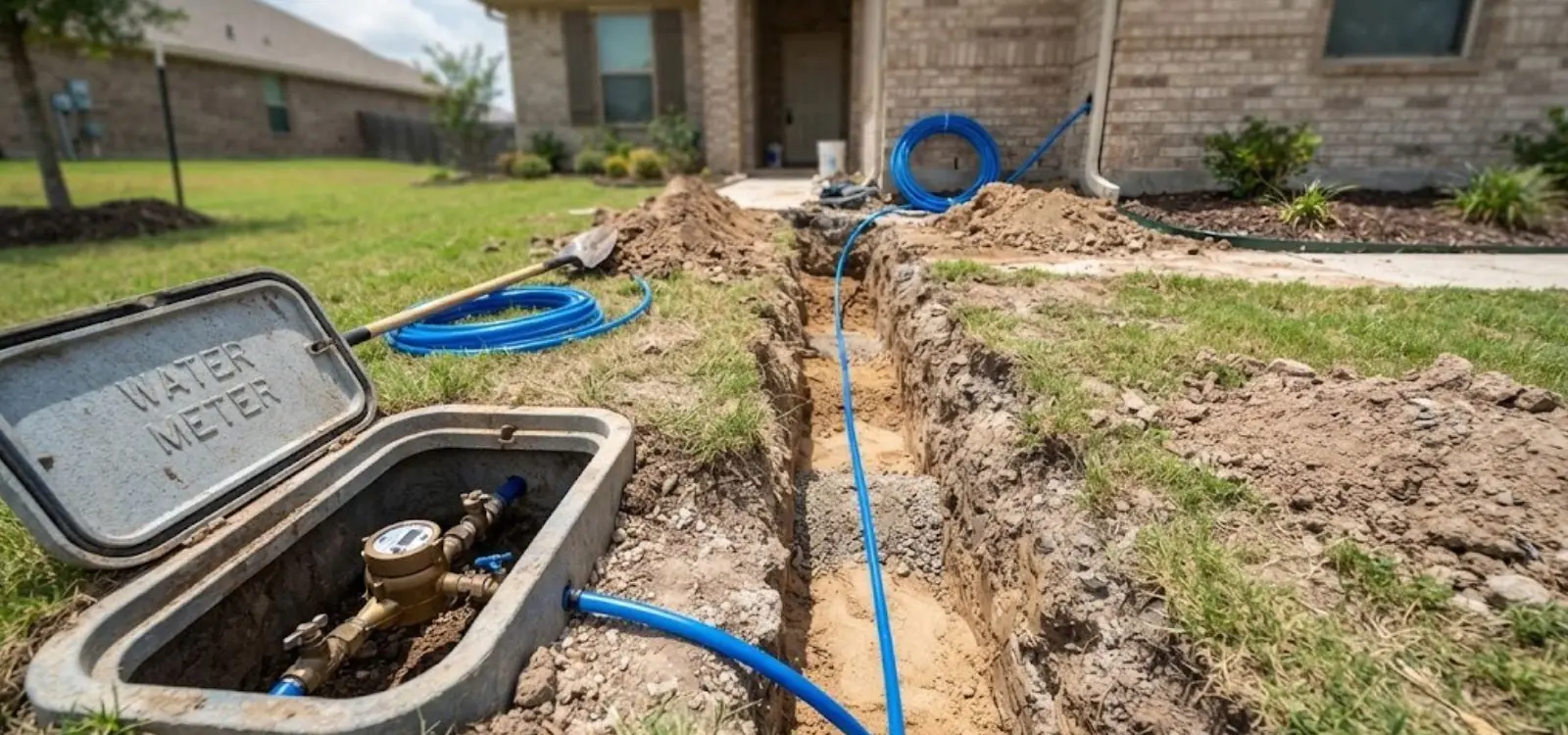
Run the meter test before you touch anything
The test is simple, and it separates a real leak from a high bill caused by heavy use. Do it when nobody is home or everyone has stopped using water.
- 1Stop every source of water. Close taps, pause the dishwasher and washing machine, and make sure no one flushes. An ice maker refilling can fool you, so note whether the fridge is cycling.
- 2Find the meter. It is usually in the basement near where the main line enters, or in a pit outside. Lift the cover or lid and wipe the glass clean.
- 3Look for movement. Many meters have a small triangle or star that spins with even a trickle, plus a dial of moving digits. Any spin with all water off means a leak.
- 4Write down the reading. Wait a while without using water, then read it again. If the number moved, water is leaving the system.
- 5Close the main valve and look again. If the meter stops once the house valve is shut, the leak is inside. If it keeps moving, the leak is on the pipe between the meter and the valve, or the meter itself is the issue.
That last step is the most useful one. It tells you whether to search the house or call about the line underground.
Where water goes when the meter will not stop
Most hidden leaks fall into a short list. Checking them in this order saves the most time, because the simple, common causes come first.
| Where to look | What gives it away | First check |
|---|---|---|
| Toilets | Faint hissing or a tank that refills on its own | Add a few drops of dye to the tank and wait without flushing |
| Outdoor hose bibs | Wet soil near the foundation or a drip at the spigot | Look at the spout and the wall behind it |
| Water heater and softener | Damp floor, rusty fittings, a relief valve that weeps | Check the drain line and relief pipe for moisture |
| Irrigation or yard line | Soggy patch or unusually green grass in dry weather | Walk the line between the house and the meter |
| Pipes in walls or under the slab | Warm floor spot, stained ceiling below, musty smell | Feel for warm patches and watch for new stains |
Toilets deserve the first look. A flapper that does not seal lets water trickle from the tank into the bowl all day, and you never see it. The dye test shows it in a few minutes, because color appears in the bowl without a flush.
Reading the bill and the meter are two different jobs
A high bill does not prove a leak. A guest week, a new pool fill or a long stretch of lawn watering can raise a bill with nothing wrong. The meter test above is better evidence than the total.
The reverse also happens. A slow leak at a toilet may only add a modest amount each month, so the bill creeps up and nobody notices until the meter test is run. If this month's use jumped compared with the same month last year, treat it as a reason to test, not a reason to argue.
Ask for the dates of the last meter reading on your bill. If the number on the meter in your basement does not match what was billed, that is a question for the billing office rather than a plumber.
Meter still moving?
Tell the dispatcher what the main-valve test showed, and the plumber arrives knowing whether to start in the house or the yard.
Who to ask at the city about the meter and the bill
North Ridgeville's Public Utilities Division bills water, sanitary sewer, stormwater and refuse to more than 15,000 accounts, so meter and bill questions go through one office. You can reach it at (440) 490-2049 from 8:00 a.m. to 4:30 p.m., Monday to Friday, and City Hall sits at 7307 Avon Belden Road.
The city website lists a water meter page and a meter replacement program. If your meter will not read, looks damaged, or shows a number that does not match your bill, that office is the right first call. A plumber works on your side of the meter and the division handles the meter itself, so a clear question to each saves a repeat visit.
If your home is across the line in Avon or Elyria, call whichever office sends your bill, because those are separate systems with their own staff and hours.
When the leak is outside or under the floor
If the meter runs with the house valve closed, the loss is on the supply line between the meter and the house, or at a joint near the valve. Buried pipe leaks rarely show on the surface right away, because soil soaks up water before it pools.
A plumber uses acoustic listening gear and a tracing method to find the exact spot, so the yard is opened once instead of dug in three places. That is the core of leak detection, and it is less expensive than guessing with a shovel.
Once the spot is known, the fix depends on the pipe. A short repair is possible if the line is sound, and a failing run may call for water line repair or replacement of the section. The plumber explains the options and the price before digging starts.
When to stop looking and call
- Water is visible on a floor, ceiling or foundation wall. Close the main valve and call the 24/7 line.
- The meter moves with the main valve shut. The leak is outside the house and cannot be fixed by tightening a fitting.
- A wall or floor is warm or damp with no obvious source. Hidden pipes under a slab or behind drywall need tools, not guesswork.
- You fixed the toilet and the meter still moves. There is a second leak, and it is often the bigger one.
Do not wait on a confirmed leak. Water finds drywall, subfloor and insulation quickly, and drying out costs more than the pipe repair.
Questions we hear
More than most people expect, because it runs around the clock. A seeping flapper can add up to a noticeable share of a monthly bill, and the meter test will show it as steady movement with everything else off.
Yes, if something is still using water. An ice maker, a softener regenerating, a humidifier or a timed irrigation zone can all draw water. Rule these out first, then repeat the test.
The meter and the line up to it are handled through the city's Public Utilities Division. Pipe on your side, from the meter to the house and inside it, belongs to the property owner. The main-valve step in the test tells you which side you are on.
If water is visible or a pipe has failed, yes. For a slow leak, it is still a good idea overnight or while you are away, because it stops the loss while you wait for the plumber.
Not always. Listening equipment pinpoints the leak first, so the opening is small and in the right place. Some repairs are done at a joint near the foundation with little digging.
A running line does not harm them, but constant dampness around them does. Rust at the heater base or a swollen cabinet floor means moisture has been there a while and should be inspected.